COOK THE COMPETITION · NEW JERSEY
Exit 16W: The Team That Borrowed New York's Name
The Jets may borrow New York's name, but this week we are giving New Jersey full credit for the Italian hot dog, the all-night diner, disco fries, and one gloriously confused game-day feast.
New York's Only Real Team
There are three NFL teams commonly treated as New York's. Two play their home games in New Jersey. The other plays in Orchard Park.
We are not here to tell the Jets what state they are from. Their own website does that. It lists their home field at One MetLife Stadium Drive, East Rutherford, New Jersey, complete with a New Jersey ZIP code. At some point, even a rivalry has to respect the United States Postal Service. New York Jets stadium FAQ
So when the Bills Cook the Competition this week, we are not cooking New York. Buffalo already has New York covered. We are taking Exit 16W, heading into the Meadowlands, and giving the Garden State the credit the Jets keep leaving off the helmet.
That is not a consolation prize. New Jersey has built a food identity as loud, practical, crowded, generous, and gloriously excessive as the state itself. This is a place of neighborhood sandwich shops, stainless-steel diners, roadside farm stands, late-night gravy, and meals engineered to survive a commute. The Jets may have borrowed the name across the Hudson. The food never needed to.
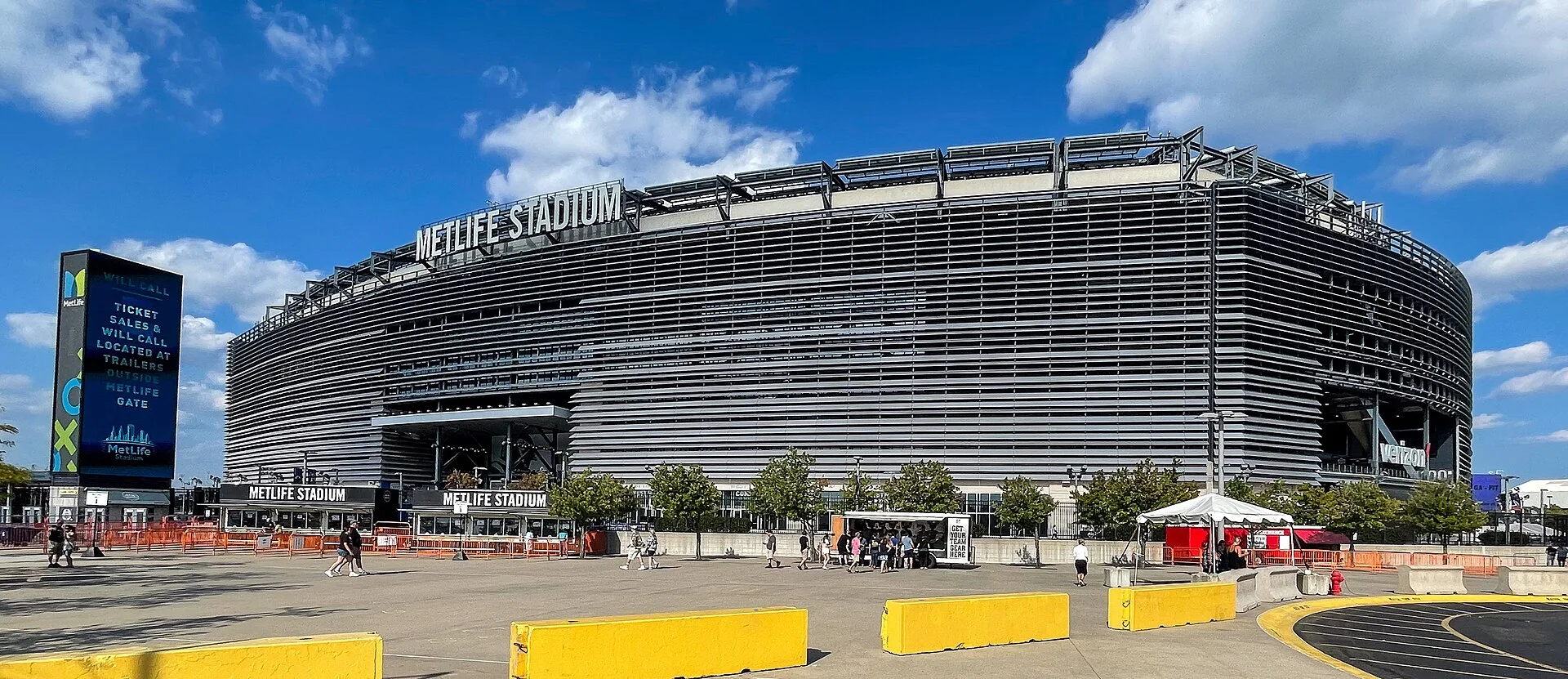
New York in Name. New Jersey by GPS.
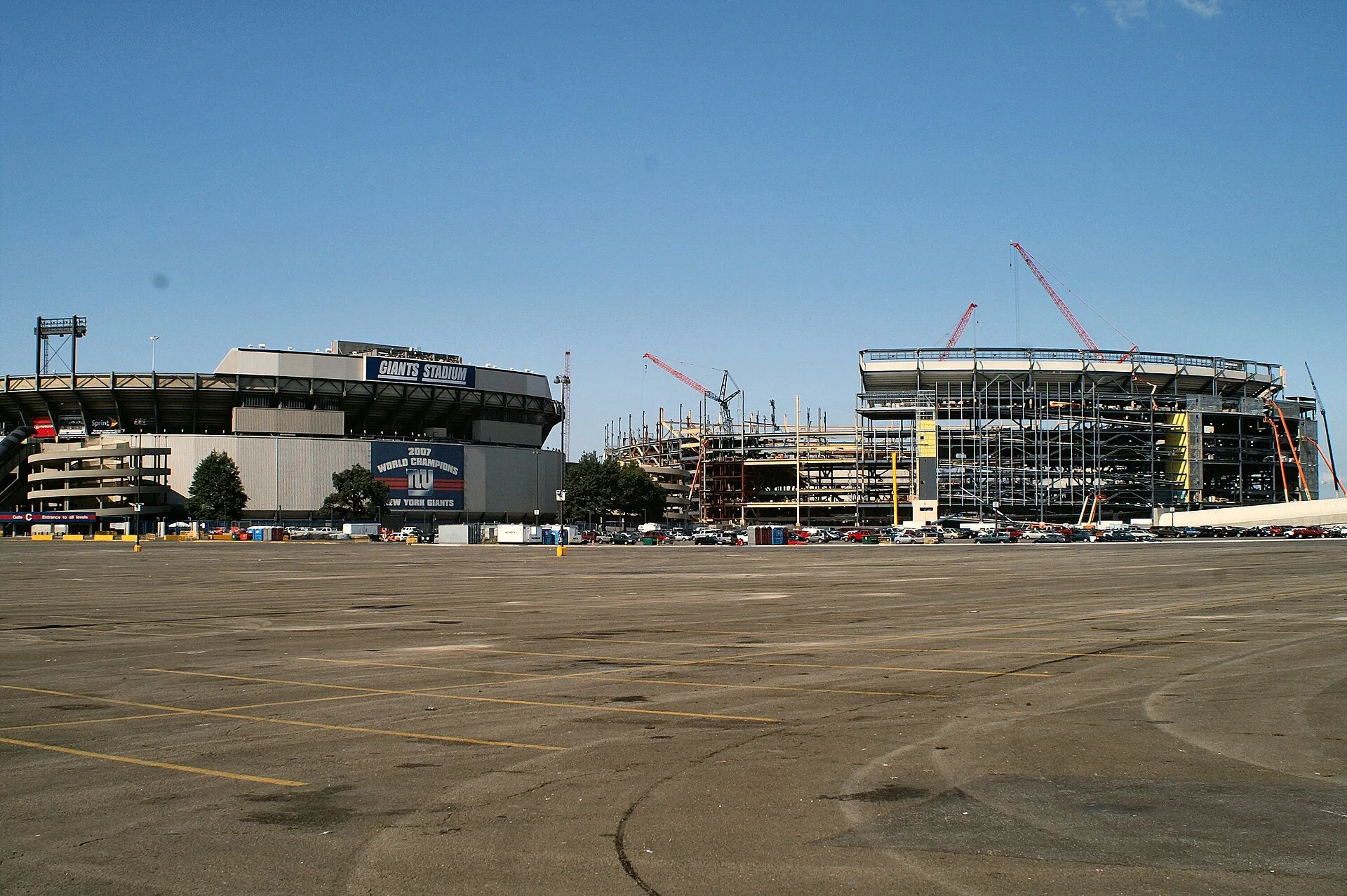
The Meadowlands story begins before the current silver stadium rose beside the Turnpike. The New Jersey Sports and Exposition Authority was created in 1971, and the Meadowlands Sports Complex opened in 1976 with the racetrack and Giants Stadium. The Giants crossed the Hudson that year. The Jets stayed at Shea Stadium through the 1983 season, then joined the Giants in East Rutherford in 1984. Their first home game as a New Jersey tenant came on September 6. New Jersey Sports and Exposition Authority and New York Jets Meadowlands history
The old building was called Giants Stadium, which meant the Jets spent more than two decades playing in New Jersey inside a stadium named for somebody else. That is an identity crisis with luxury boxes.
MetLife Stadium opened in 2010 and gave both clubs a neutral roofline, if not a neutral mailing address. The Jets and Giants retained New York because their brands belong to the wider New York metropolitan market, a region that has always spilled across rivers and state lines. That explanation is commercially reasonable. It is also no fun at all, so we will continue calling them the East Rutherford Jets whenever the score permits. MetLife Stadium facts
The Bills and Jets have been arguing since before either club had an NFL logo on the schedule. Buffalo's first regular-season game in 1960 came against the New York Titans, the franchise that would become the Jets, at the Polo Grounds. The names, stadiums, quarterbacks, and uniforms have changed, but the two old AFL neighbors keep finding each other twice a year. Buffalo brings the only part of this rivalry that actually plays home games in New York State. New Jersey brings the better sandwich for the drive home. Buffalo Bills rivalry history
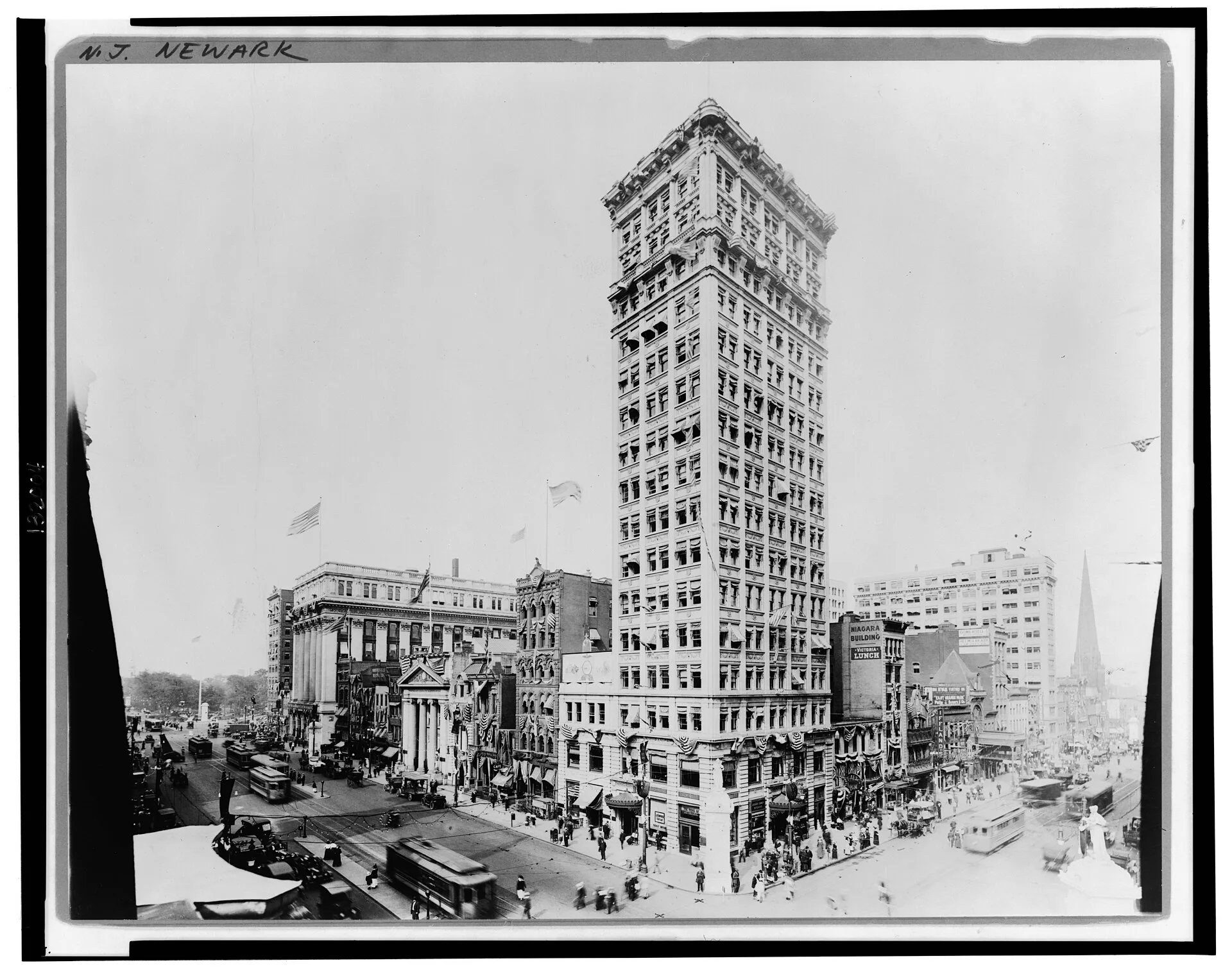
Newark Didn't Need New York to Invent a Better Hot Dog
To understand the Newark Italian hot dog, forget the tidy little bun that politely holds one frankfurter. Newark looked at that arrangement and decided it lacked potatoes, peppers, onions, another hot dog, and sufficient structural engineering.
The sandwich is closely associated with Jimmy Buff's, which traces its beginning to James "Buff" Racioppi's Newark shop at 14th Avenue and 9th Street in 1932. The company's history says the combination was first served to friends and relatives before becoming the center of the restaurant's menu. Contemporary accounts still describe the defining build: a quarter of substantial round pizza bread for a single, a half for a double, fried hot dogs, onions, peppers, and thick potato slices. This is not a hot dog with toppings. It is an entire griddle shift packed into bread. Jimmy Buff's history and New Jersey Monthly
The sandwich also belongs to the immigrant city that produced it. Rutgers' New Jersey history materials note that Italians in Newark grew from roughly 400 residents in 1880 to 27,000 by 1920. In the First Ward, food businesses, pushcarts, groceries, and neighborhood networks helped newcomers build daily life around familiar tastes while adapting to an industrial American city. The Italian hot dog is not a preserved relic from Italy. It is an Italian American invention, made in Newark from the logic of abundance, thrift, portability, and feeding people well. Rutgers, immigration and New Jersey
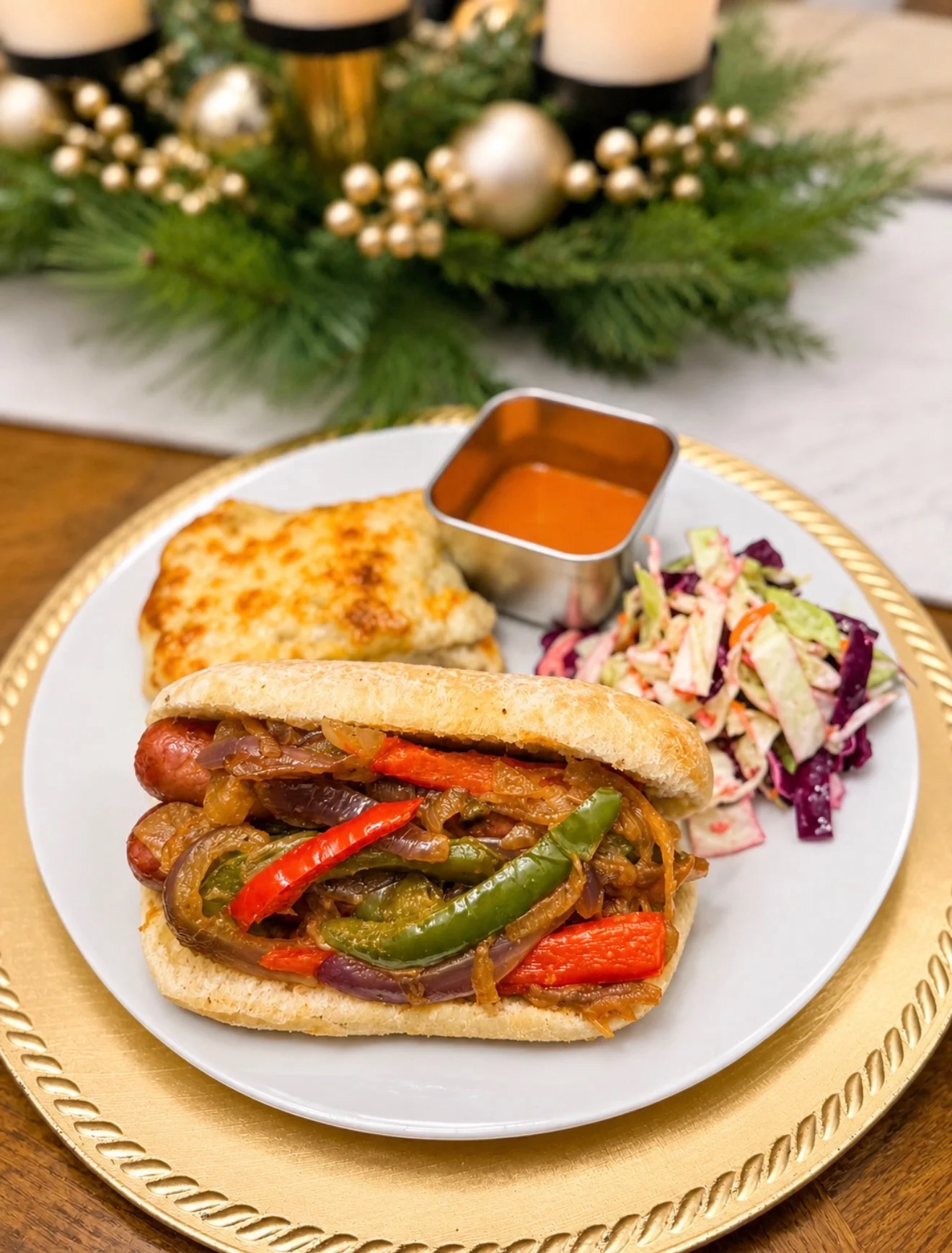
That is the starting point for our Exit 16W Double Dog. We make a large sourdough pizza bread, sear two all-beef hot dogs, and load them with crispy potatoes, peppers, and caramelized onions. The sourdough and our exact potato preparation are Blackened Ladle choices. We are not claiming that a Newark shop has been waiting ninety years for us to show up with a starter jar. We are respecting the sandwich's architecture, especially its absolute refusal to be modest.
The Diner Capital Never Closes
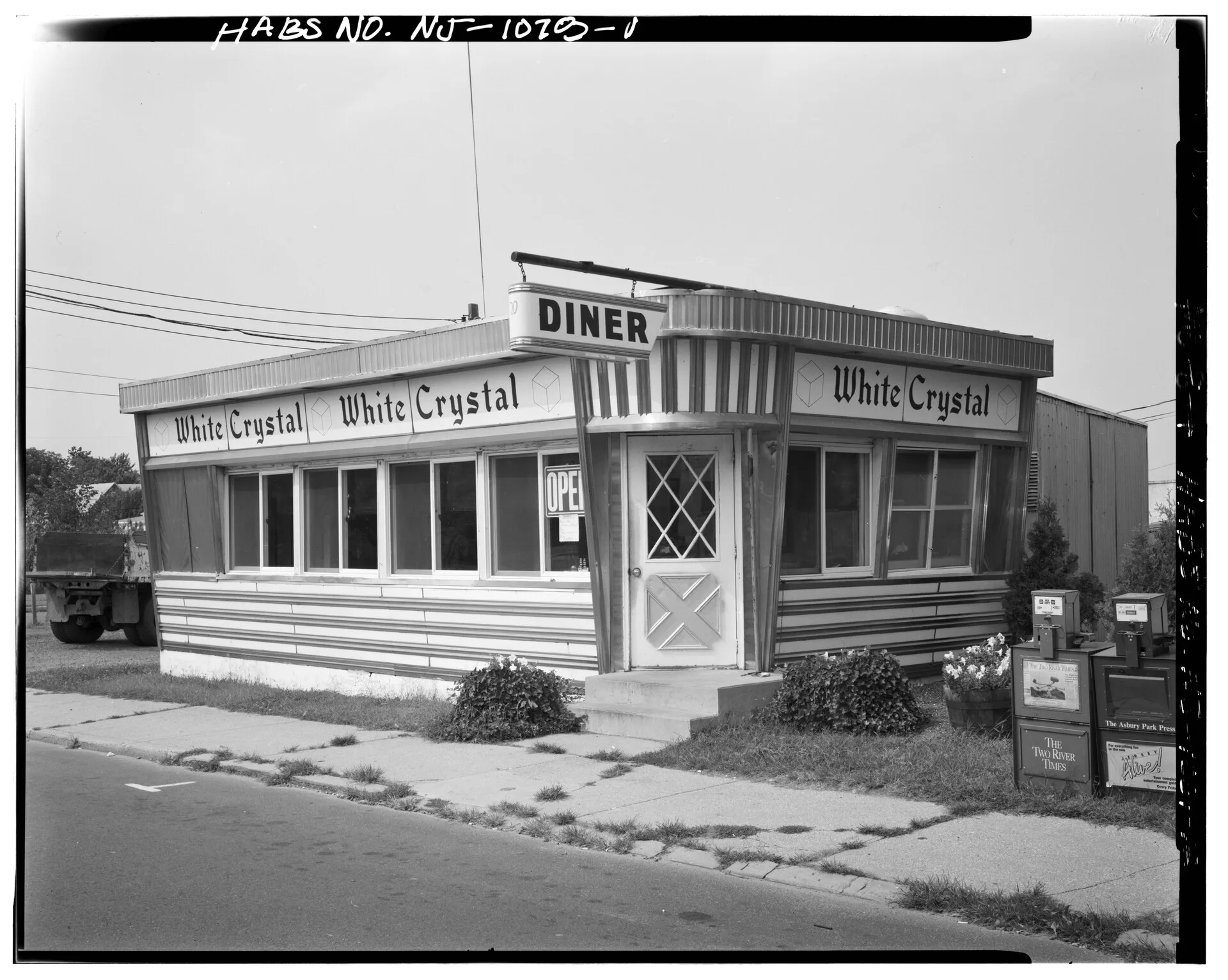
New Jersey did not become the diner capital simply because residents enjoy eggs at unreasonable hours, though that certainly helped. The state helped manufacture the physical idea of the American diner.
Companies such as Silk City in Paterson, Fodero in Bloomfield, Jerry O'Mahony in Elizabeth, and Kullman in Avenel built prefabricated dining cars that could be shipped to a roadside site and opened for business. Paterson's vehicle company had a dedicated diner-manufacturing division by 1926. Local production made delivery easier, while highways, dense suburbs, shore traffic, factory shifts, and commuters created a dependable audience for inexpensive food served across long hours. The chrome and stainless steel were not merely decoration. They were New Jersey manufacturing turned into a place to get coffee. Paterson Museum, Silk City Diners and Preservation New Jersey
Immigrant ownership kept the form alive and expanded what a diner could be. Greek American families became especially important in the postwar diner business, bringing entrepreneurial networks and menus big enough to require their own table of contents. A Jersey diner could serve pancakes, souvlaki, meatloaf, pie, a club sandwich, and something covered in gravy without acting as if any of those choices required an explanation. The menu made room because the state did. Encyclopedia of Greater Philadelphia, diner history
Disco Fries: Because Regular Fries Apparently Weren't Enough
Disco fries follow perfect diner logic. Start with french fries. Add melted mozzarella. Pour brown gravy over the situation. Serve after the hour when responsible decisions have gone home.
Their exact origin is slippery. The Tick Tock Diner in Clifton is frequently credited with the name or its popularization, and the dish is strongly associated with the club-going crowds of the 1970s and 1980s. But there is no secure record naming one inventor on one night. That uncertainty feels appropriate for food built to be ordered after midnight. What is clear is the Jersey formula: fries, mozzarella, and brown gravy, related to but distinct from Quebec poutine, which traditionally uses cheese curds. Eater, disco fries history and Tasting Table on the uncertain origin
Our Jersey Disco Inferno takes those three elements and builds upward. Creamy layers of Yukon Gold potatoes, Gruyère, mozzarella, and Parmesan bake beneath a golden cheese crust. Crispy shoestring potatoes crown each square, and brown diner gravy finishes part of the top. The gravy stays separate from the cream, and some of the crown stays uncovered. Even this much rebellion needs a little structure.
This is not a traditional New Jersey dish. It is an original Blackened Ladle creation inspired by one. That distinction matters almost as much as keeping a little of the potato crown crisp beneath the gravy.
The Garden State Has More Than Exit Signs
It is easy to reduce New Jersey to highways because so many people experience it through a windshield. The state's nickname asks us to look past the guardrail.
Abraham Browning of Camden is commonly credited with popularizing “the Garden State” during New Jersey Day at the 1876 Centennial Exhibition in Philadelphia. The familiar account describes New Jersey as a barrel of good things to eat, open at both ends, with New York reaching into one side and Pennsylvania into the other. The exact origin story has been debated, but the image endured because it captured something real: New Jersey's farms fed the cities on both sides. State of New Jersey nickname history
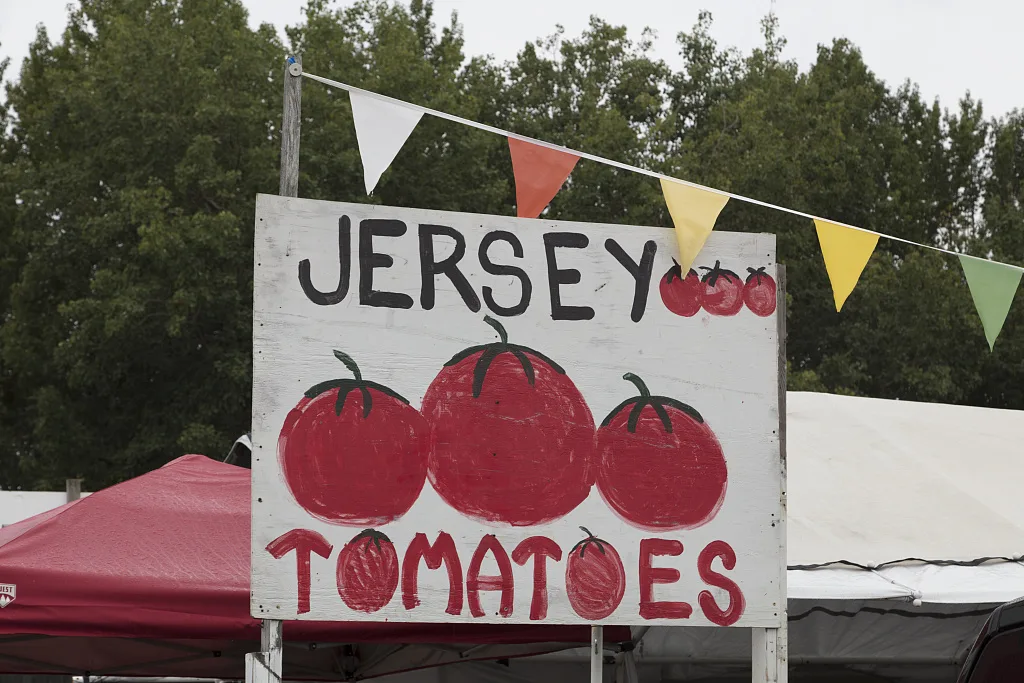
That agricultural identity is not only nostalgic. New Jersey farms grow more than one hundred kinds of fruits and vegetables, and the state remains a major producer of tomatoes and bell peppers, along with blueberries, cranberries, peaches, spinach, squash, and eggplant. The tomato carries special Jersey pride, helped by generations of truck farming, market access, and breeding work that connected local farms with urban tables and food companies. New Jersey Department of Agriculture and Rutgers on the Jersey tomato
That is where the rest of our plate finds its footing. Jersey Turnpike Cherry-Pepper Slaw brings cabbage and pickled cherry peppers dressed with a sharp vinaigrette. Wrong Side of the Hudson Sauce roasts tomatoes and garlic, then adds Dijon and hot cherry peppers. Neither is an established New Jersey specialty. Both use the state's produce story to do necessary work on a very rich plate: crunch, acid, heat, and enough brightness to convince us we planned the balance all along.
The Blackened Ladle Rebellion
The full meal is a map of New Jersey drawn by somebody who missed a turn and got hungry.
The Exit 16W Double Dog carries Newark's Italian hot dog tradition into homemade sourdough pizza bread. Jersey Disco Inferno rebuilds the all-night diner as brown gravy and mozzarella au gratin potatoes with a crispy shoestring crown. The Jersey Turnpike Cherry-Pepper Slaw cuts through the potatoes, cheese, and beef. The Wrong Side of the Hudson Sauce ties roasted Jersey tomato flavor to mustard, garlic, and pepper heat.
It is oversized because the source material is oversized. It is messy because a double Italian hot dog is not designed for a white tablecloth or a clean shirt. It is a little ridiculous because this series is called Cook the Competition, not Sensibly Portion the Competition.
Most of all, it gives New Jersey its name back for the week. The Jets can keep the skyline branding, the Manhattan marketing events, and the ceremonial claim to a city across the river. We will take Newark's sandwich, Paterson's stainless-steel diner history, the late-night gravy, the farm-stand tomatoes, and the stadium address printed in plain English.
Buffalo and the Jets have been trading hits since the Titans wore blue and gold at the Polo Grounds. This time, the Bills arrive as New York's only actual home team, and we arrive with a sandwich that needs two hands, a square of Jersey Disco Inferno, and no confusion about where dinner came from.
New Jersey, this plate is yours.
The football team is still working through some paperwork.
Comments
Loading comments…