COOK THE COMPETITION · BILLS AT VIKINGS · MINNEAPOLIS, MINNESOTA
Saint Paul: The Hotdish That Refused to Stay Humble
From church-basement cookbooks and northern rice lakes to a six-pie rebellion, the Minnesota story behind our most ambitious hotdish.
There are weeks when Cook the Competition lets us visit a city from the safe distance of a football schedule. We read, we cook, we talk a little trash, and we move on.
This week is different. The Bills will play the Vikings at U.S. Bank Stadium in Minneapolis. Saint Paul is where this story gets personal.
My wife’s family is from the Saint Paul area, which means Minnesota already lives on our family map. This is not a city I can treat like a clever opponent-themed ingredient list. It deserves the same care we gave Buffalo, my hometown, because this time the food belongs to the other side of our own dinner table.
The orange cheese curds in The Saint Paul Hotdish Rebellion come from another branch of the family map. My wife’s mom is from Wisconsin, and the curds are our nod to her side of the border. Minnesota and Wisconsin can spend all Sunday arguing about football. At our dinner table, the Minnesota hotdish and the Wisconsin curds get along just fine.
So this week we are not simply making hotdish. We are asking how one of America’s most famously unpretentious foods became a symbol of Minnesota care, thrift, argument, reinvention, and community. Then, because this is The Blackened Ladle, we are wrapping it in sourdough pastry, crowning it with tots and cheese curds, and giving every person at the table an individual pie.
Hotdish may have started humble. It did not agree to stay that way.
Two Cities at the Same Table
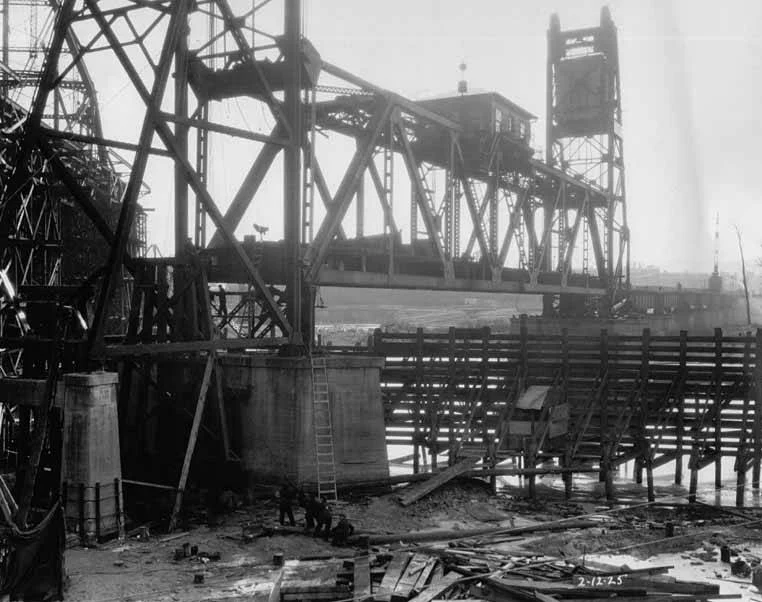
Minneapolis and Saint Paul are called the Twin Cities, but nobody who knows them mistakes them for identical twins. Saint Paul grew as Minnesota’s capital, a Mississippi River landing, and a commercial gateway. Railroads reinforced that role. Union Depot became one of the country’s great passenger stations and, after New York and Chicago, the third-largest railway mail transfer facility in the United States. The city received people and goods, then sent them deeper into Minnesota and across the northern plains. Minnesota Historical Society: Saint Paul Union Depot · National Park Service: The railroad era
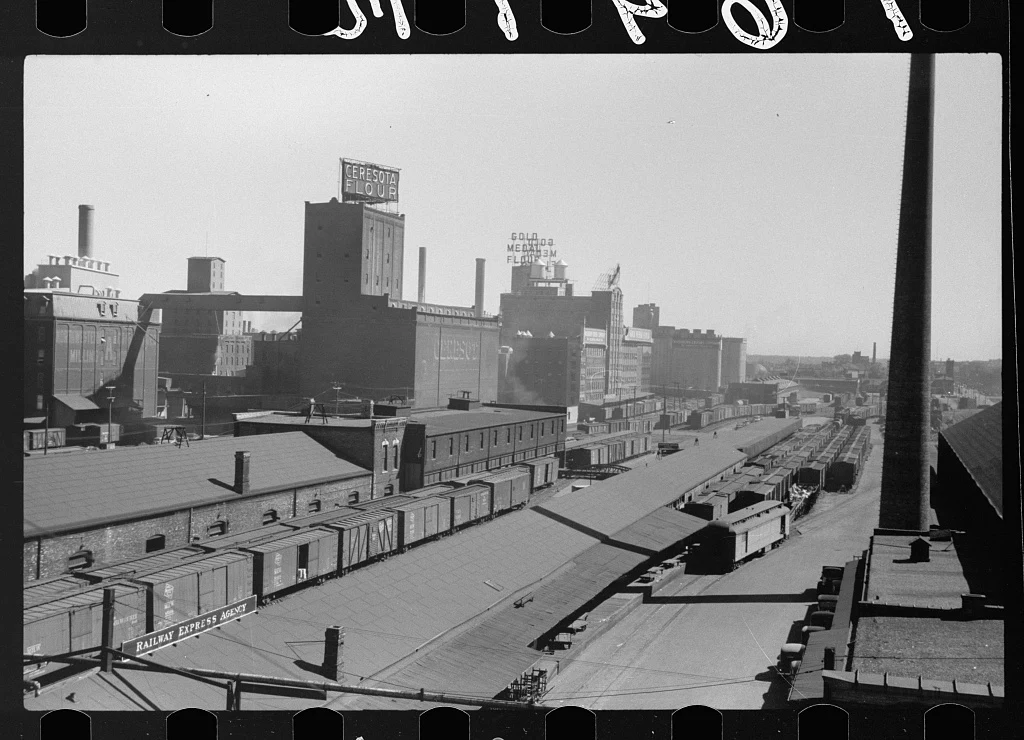
Minneapolis built a different relationship with the same river. At St. Anthony Falls, falling water powered sawmills and then an industrial flour empire. From 1880 to 1930, Minneapolis held the title of flour-milling capital of the world. Grain arrived from farms across Minnesota, the Dakotas, and Canada, and flour left by rail in staggering quantities. One river helped make Saint Paul a gateway and Minneapolis a machine. Minnesota Historical Society: Minneapolis Flour Milling Boom
The cities grew through immigration, but not in one uniform wave. Saint Paul neighborhoods became homes for German, Irish, Swedish, Polish, Italian, Jewish, Mexican, and later Hmong, Karen, Somali, and other communities. Swede Hollow alone passed through several immigrant eras as newcomers built lives near the rail lines. Minnesota cooking did not develop in a sealed Scandinavian pantry. It grew through neighboring tables, church kitchens, factory shifts, migration, and whatever could be stretched far enough to feed everybody. Minnesota Historical Society: Swede Hollow
The State Fair eventually settled in Falcon Heights, fittingly positioned between the two cities after Saint Paul and Minneapolis spent years competing to host it. It became the Great Minnesota Get-Together, a place where agriculture, industry, civic pride, and the urge to put nearly anything on a stick could meet in one crowded afternoon. Hotdish belongs to that same instinct. It is serious food that does not insist on behaving seriously. Minnesota State Fair: History

The Church Basement Formula
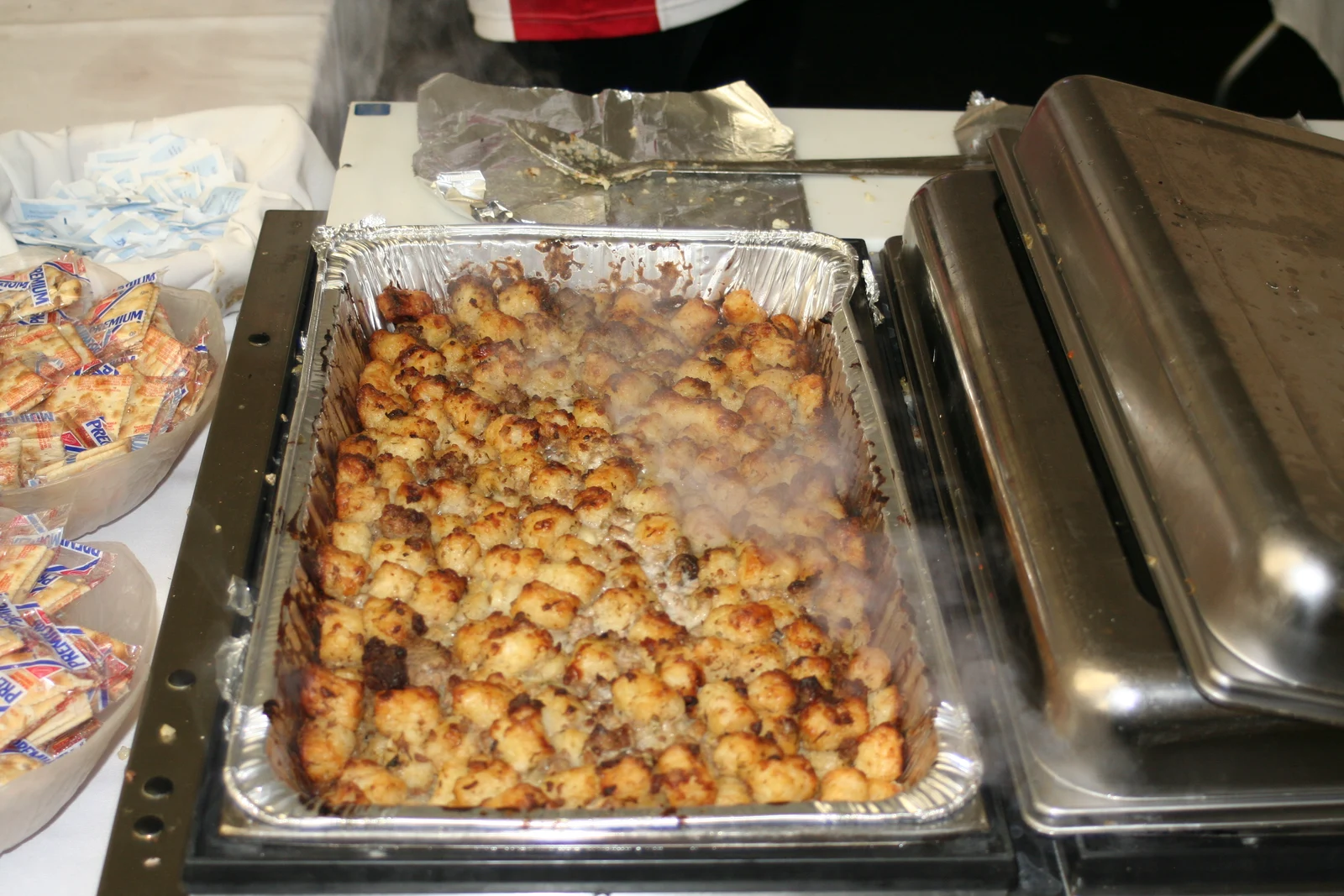
Hotdish is often described by ingredients, but it makes more sense as a job. It feeds many people without demanding expensive meat, delicate timing, or a stack of serving dishes. It travels. It waits without falling apart. It can be assembled ahead of time, reheated, placed beside three other versions on a folding table, and spooned onto a paper plate while somebody pours coffee from a metal urn.
The earliest known printed recipe called “hot dish” appears in a 1930 cookbook assembled by the Ladies’ Aid Society of Grace Lutheran Church in Mankato. C. W. Anderson’s contribution combined ground beef, tomato soup, Creamette pasta, and canned peas. It did not have tots, cream of mushroom soup, or a constitutional argument about whether corn belongs. What it had was the structure: protein, starch, vegetable, binder, oven. Minnesota Historical Society: Hotdish · MPR News: The Mankato cookbook
The timing mattered. During the Great Depression, cooks needed meals that stretched modest quantities of meat and made use of canned foods. Condensed soup offered convenience and consistency. After World War II, hotdish moved easily between church luncheons, funerals, bridal showers, political gatherings, family kitchens, and neighborhood potlucks. It became food for the moments when a community needed to arrive carrying something useful.
Community cookbooks helped it travel. These books were assembled by churches, schools, clubs, and civic groups, often as fundraisers. They were not written by a distant authority. They were built from neighbors submitting the dish that worked in their own kitchen. The recipe carried the contributor’s name, and sometimes that name mattered as much as the instructions. A community cookbook was a social network with spiral binding. Minnesota Historical Society: Cookbook Collection
Tater tots arrived later. Ore-Ida developed them in 1953 and introduced them to supermarkets in 1956. By the 1960s, they had become a defining hotdish topping. This was less a sacred rule than a brilliant piece of engineering. Tots arrived frozen, stayed crisp above a creamy filling, divided easily into portions, and made a beige pan of dinner look organized. Minnesota Historical Society: Hotdish
Manoomin Was Here First
Our filling includes wild rice, and this is where the story needs to slow down.
Hotdish is a modern regional tradition. Manoomin is not. Long before Minnesota was a state, and long before a church cookbook printed the words “hot dish,” Anishinaabe people maintained a living relationship with the grain that grows on water. Manoomin is not simply Minnesota’s picturesque local starch. It is central to Ojibwe migration history, foodways, ceremony, economy, and relationships with land and water. The Great Lakes Indian Fish and Wildlife Commission translates the name as “the good berry” and describes a reciprocal responsibility: the rice and the people take care of each other. Great Lakes Indian Fish and Wildlife Commission: Ganawenindiwag Manoomin Anishinaabeg
Natural manoomin grows in shallow lakes, rivers, and flowages. Traditional harvesters work from canoes, with one person moving the canoe and another bending ripe stalks over the boat and gently knocking grain loose. The rice is then dried, parched, hulled, and winnowed. Those processes are knowledge, labor, and stewardship, not a rustic prelude to a grocery-store bag. Minnesota Historical Society: Wild Rice and the Ojibwe
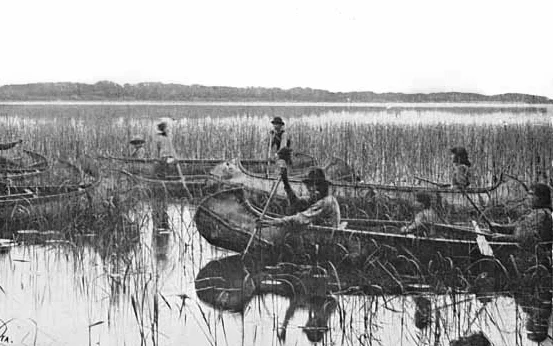
Minnesota also produces cultivated wild rice in flooded paddies, harvested mechanically. Both natural lake rice and cultivated wild rice are the same broad food category, but they are not culturally interchangeable. Industrial production helped make wild rice more widely available and less expensive in the late twentieth century. It also created economic and ecological tensions as paddy-grown rice competed with hand-harvested grain and the living waters that support natural stands faced pollution, unstable water levels, mining impacts, and climate change. Minnesota Wild Rice Legislative Report · GLIFWC: Manoomin stewardship

Putting wild rice in a hotdish does not make hotdish an Indigenous dish. The honest connection is narrower and more meaningful. Minnesota cooks adopted a food that had sustained Indigenous communities for generations, often without carrying the full story with it. Our recipe should name that history rather than treating manoomin as scenery. If possible, cooks can seek naturally grown, tribally harvested manoomin and learn who produced it. Whatever rice is used, the ingredient deserves more than the label “Northwoods flavor.”
When Hotdish Left the Basement
Hotdish survived because it could change. Minnesota’s newer communities made versions with curry, chiles, tortillas, Hmong flavors, and the seasonings of their own kitchens. At Northeast Minneapolis’s Hotdish Revolution, which ran from 2005 through 2019 and returned in 2025, cooks treated the format as an invitation. The event mixed charity, music, neighborhood competition, gelatin molds, and pans of food that stretched the definition without breaking it. Hotdish Revolution returns · Minnesota Star Tribune: Comfort and democracy
Then came HauteDish in Minneapolis’s North Loop. Open from 2010 to 2017, the restaurant built its identity around “new Midwestern cuisine.” Its best-known plate pulled Tater Tot Hotdish apart and rebuilt it with short rib, porcini béchamel, green beans, and crisp potato croquettes. It was clever, polished, and just self-aware enough to know that putting a French sauce under a tot was both culinary ambition and a very Minnesota joke. Reviewers loved it. Heavy Table: You Say Hot Dish, I Say HauteDish · Eater Twin Cities: Haute Dish Has Closed
Saint Paul now offers the counterargument. Smorgie’s opened near the arena in 2024 with affordable comfort food and a current menu that describes its Tater Tot Hotdish as “just like grandma used to make,” with beef, green beans, corn, tots, and a slice of American cheese. One restaurant made hotdish dress for a tasting menu. The other makes sure a hungry person leaving an event can still afford dinner. Both understand that the form is roomy enough for interpretation. Smorgie’s menu · Smorgie’s press page
That is why hotdish refused to stay humble. Humility was never the real requirement. Usefulness was.
Greater Minnesota in the Pan
The Twin Cities may have the loudest restaurant conversation, but the hotdish story keeps pointing outward. Its earliest known printed name comes from Mankato in southern Minnesota. Manoomin leads north to the lakes and tribal nations. Grain and potatoes connect the metro to farms across the state and northern plains. East Grand Forks chef and writer Molly Yeh carried hotdish into a newer national food conversation. Austin gave the world SPAM, another inexpensive pantry food that Minnesotans have repeatedly turned from industrial product into local identity. Minnesota Historical Society: Hotdish · Hormel Foods: SPAM and Austin
The dish is not a museum piece from one ethnic group. It is a format built by many cooks responding to cost, weather, work, family size, available ingredients, and the need to bring dinner somewhere else. That helps explain why arguments about authenticity never end. Green beans or corn? Beef or chicken? Soup from a can or gravy from scratch? Tots in rows or tossed on top? The argument is part of the inheritance.
Our answer borrows from several parts of that wider map. Smoked chicken gives the filling depth. Wild rice brings chew and a direct obligation to tell the manoomin story properly. Brown butter mushroom gravy replaces canned soup without making fun of the cooks who used it. Sourdough pastry nods toward Minneapolis flour history while admitting that an individual hand pie is our invention, not Minnesota tradition. The orange cheese curds carry the Wisconsin side of the family into a dish that started with Saint Paul. Cranberry-pepper relish cuts the richness and gives the plate a bright, tart edge.
Four Super Bowls, Fifteen Meetings, One Unpleasant Memory
The Bills and Vikings have always felt like football cousins from different conferences. Both franchises built devoted northern fan bases, both learned that cold weather can become a civic personality, and both carry the historical scar of four Super Bowl losses. Buffalo’s came in one brutal run. Minnesota’s were spread across the 1970s. Neither fan base needs the other to explain what inherited heartbreak feels like.
They have not played often. Minnesota leads the regular-season series 9 to 6 through fifteen meetings, and this Monday night game is the first Bills-Vikings matchup on Monday Night Football. Their last meeting in 2022 became an instant classic for everyone except Bills fans trying to enjoy the rest of that Sunday. Minnesota erased a 17-point deficit, Justin Jefferson made an absurd fourth-and-18 catch, Buffalo fumbled in its own end zone, and the Vikings won 33 to 30 in overtime. NFL Week 9 game capsule · Buffalo Bills: 2022 game recap
The modern connection runs deeper through Stefon Diggs and Justin Jefferson. Buffalo acquired Diggs from Minnesota in 2020, and one of the draft picks sent back became Jefferson. The trade helped reshape both offenses, then gave the 2022 meeting the feeling of a family argument with elite route running.
This time the Bills head to Minneapolis for Monday night, and our kitchen arrives with six hotdish pies. Loving the Twin Cities does not require surrendering the game. We can appreciate Saint Paul, acknowledge the Vikings’ place in our recent football nightmares, feed the Minnesota side of the family properly, and still expect Buffalo to leave with the win.
The Saint Paul Hotdish Rebellion
Traditional hotdish succeeds because everything comes together in one pan. We decided to respect that principle by violating the pan.
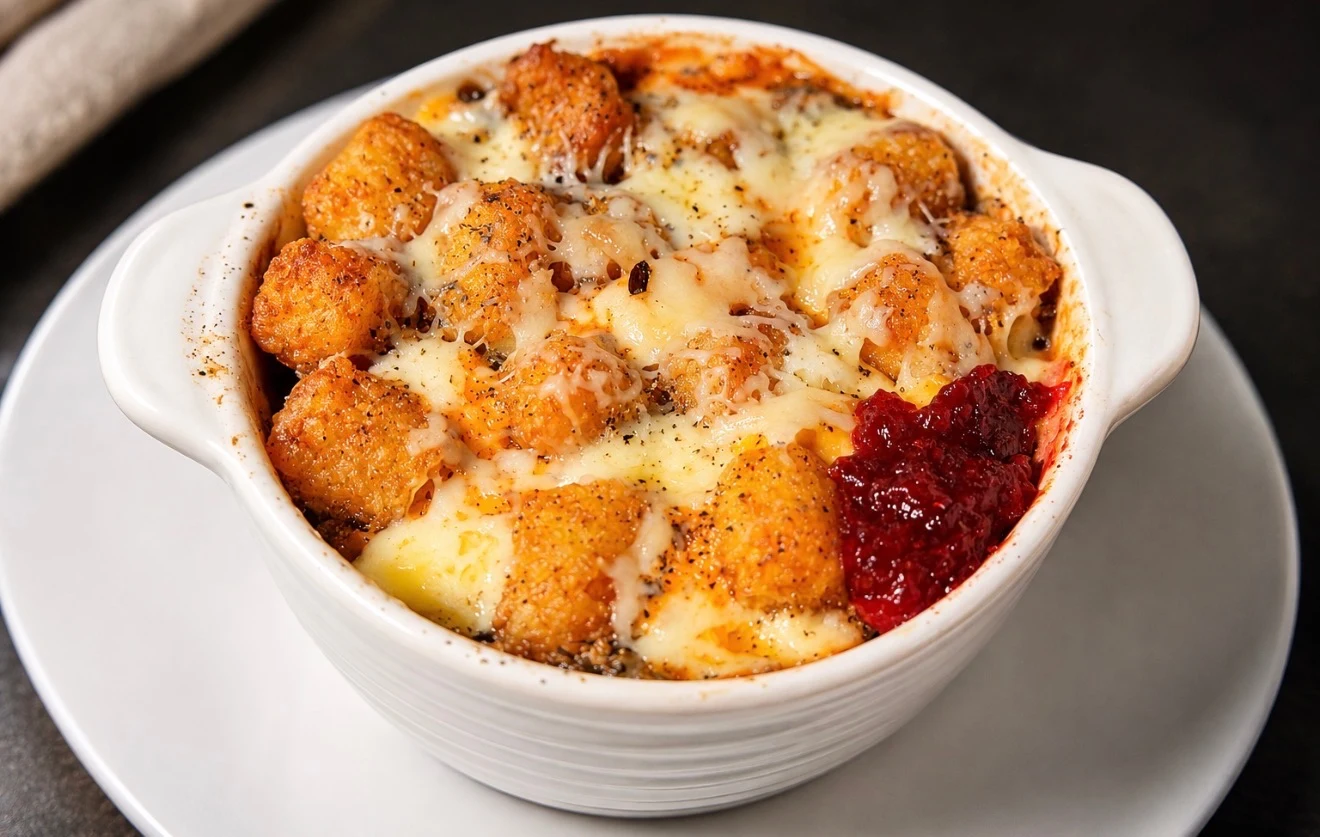
The Saint Paul Hotdish Rebellion divides the meal into six individual sourdough pastry shells. Each holds smoked chicken and wild rice in a creamy mushroom filling, with brown butter mushroom gravy served alongside. The pies are topped with extra-crispy tater tots and orange cheese curds tucked into the crown so they melt around the potatoes rather than disappearing into the filling.
This is not a historic Saint Paul recipe. It is not a traditional Ojibwe preparation, and the sourdough shells are not something we found in a Lutheran cookbook. It is our original interpretation of the hotdish idea: stretch good ingredients, build a complete meal, make it portable, and give people something generous enough to carry to the table.
The cranberry-pepper relish keeps the whole project honest. Smoke, gravy, butter, pastry, potatoes, and cheese need interruption. The relish brings acid, fruit, and heat, waking up the next bite before the first one has completely settled in.
Hotdish was never valuable because it followed one sacred recipe. It was valuable because it showed up. It fed the church basement, the grieving family, the hockey crowd, the neighborhood fundraiser, the weeknight kitchen, and eventually the restaurant dining room.
Our version shows up wearing a sourdough shell and a ridiculous tater tot crown. Minnesota gets the hotdish. Wisconsin gets the curds. Bills Mafia gets dinner before Monday Night Football. Everybody gets a pie.
The hotdish refused to stay humble. Honestly, so did we.
Comments
Loading comments…