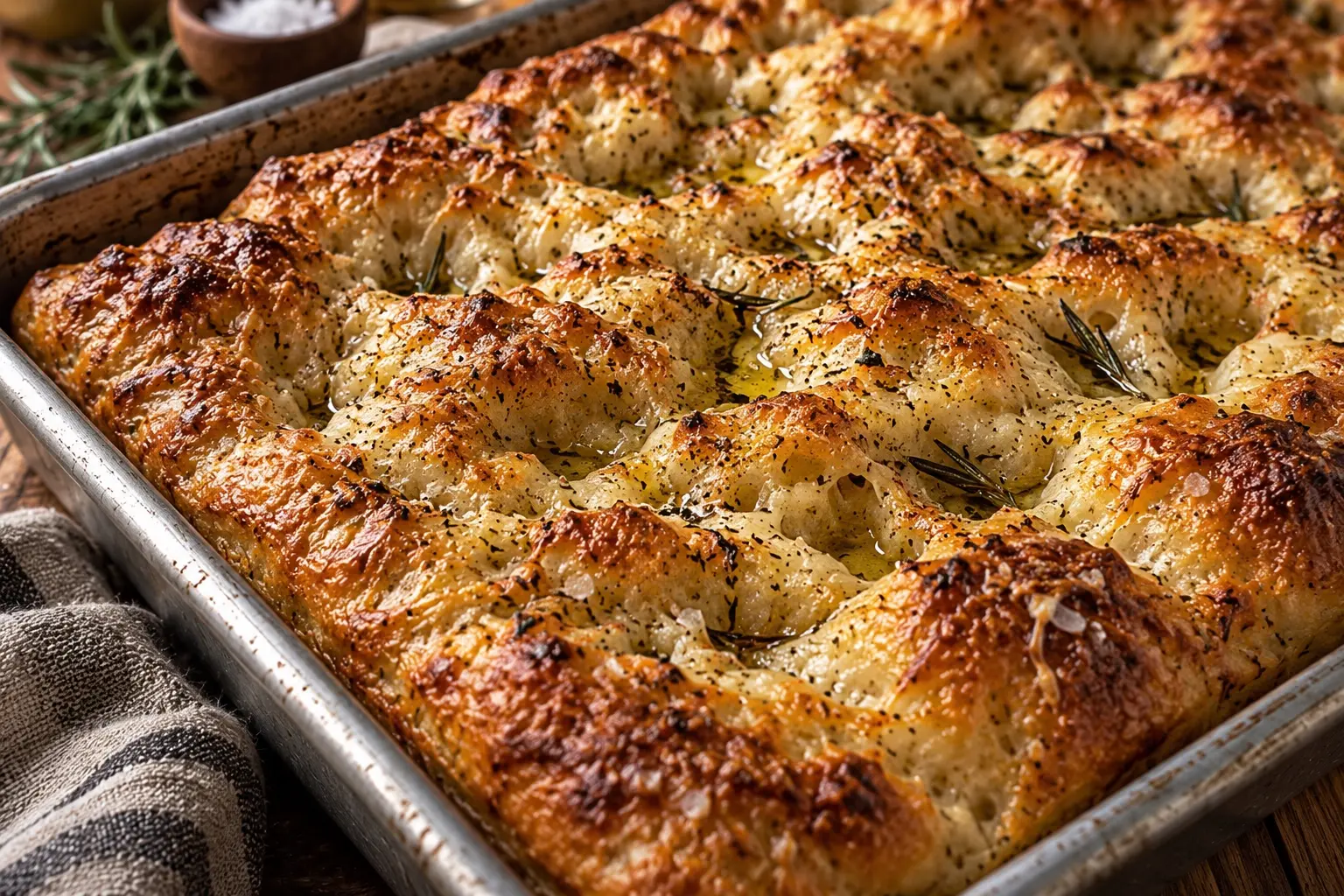
Crisp-edged, olive-oil-rich focaccia with an airy middle—and a schedule that works while you sleep.
ACTIVE TIMEAbout 30 min
RESTING TIME12+ hours
BAKE20–30 min
PAN9 × 13 inch
THE STORY
The dough that learned our schedule.
This started with a simple goal: make the focaccia we love without making the whole day answer to the dough. The overnight rest became the rhythm that stuck—mix and fold the day before, tuck it into the refrigerator, then let it wake up in an oiled pan the next morning.
It is now the house standard and the starting point for all kinds of experiments. Sometimes it stays simple. Sometimes it becomes dinner. Either way, the real cues matter more than the clock: puffy after bulk fermentation, then airy, bubbly, and very jiggly before it goes into the oven.
Method
Day before
Wake the starter.Feed it in the morning or early afternoon so it is active when you mix.
Mix the dough.In a large bowl, combine starter, salt, and warm water. Add the flour and mix until no dry flour remains. Cover and rest 30 minutes.
Build strength.Lift and fold the dough over itself from several sides. During the rise, perform three more stretch-and-fold rounds, spaced through the afternoon or evening.
Bulk ferment.Let the dough rest in a warm spot for 4–12 hours, until puffy and roughly doubled.
Chill overnight.Cover and refrigerate for 8–12 hours.
Next morning
Prepare the pan.Line a 9 × 13-inch pan with parchment if desired and add about 3 tablespoons olive oil.
Move and stretch.With oiled hands, transfer the dough to the pan. Gently stretch from underneath until it fits.
Final rise.Let the dough stand at room temperature for 2–3 hours, until very jiggly and nearly doubled.
Dimple.Preheat the oven to 425°F for at least 30 minutes. Drizzle the dough with about 3 tablespoons olive oil and dimple deeply all over.
Top and bake.Add another light drizzle of oil, flaky salt, or other toppings. Bake 20–30 minutes, until deeply golden.
Cool.Wait at least 20 minutes before slicing so the crumb can set.

Comments
Loading comments…