BALTIMORE, MARYLAND · THE STORY BEHIND THE PLATE
Charm City Does Not Keep Its Food in Separate Boxes
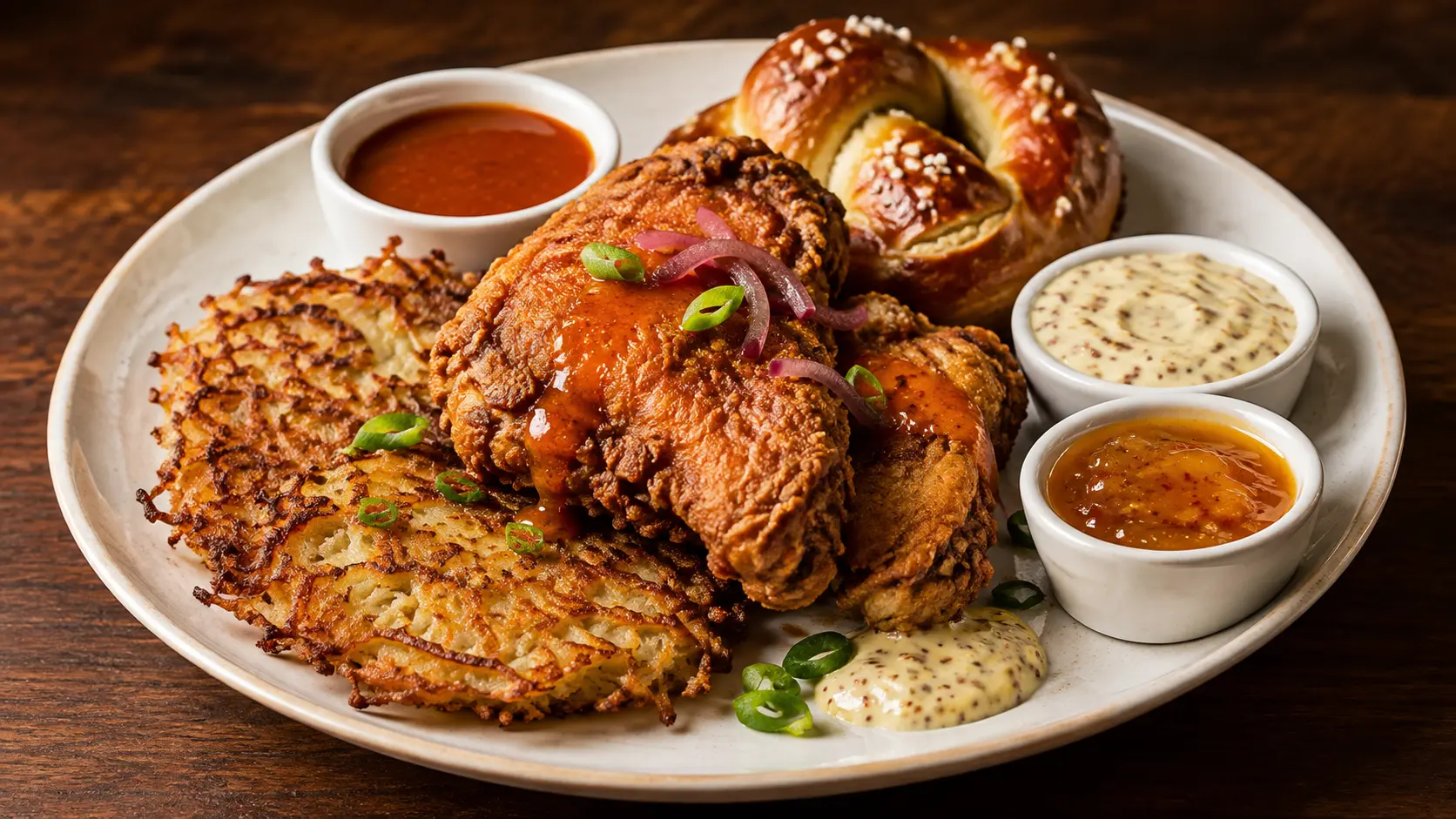
For Bills versus Ravens week, fried chicken, crispy kraut cakes, sourdough pretzels, and peach pepper butter tell a Baltimore story about neighborhood carryouts, immigrant ovens, horse drawn produce carts, and the way a city makes many traditions its own.
There are cities you can explain with a postcard, and then there is Baltimore.
The postcard gives you the Inner Harbor, a pile of steamed crabs, a dusting of Old Bay, and maybe a rowhouse tucked politely into the background. None of that is wrong. It is just not enough. Baltimore is a city of ports and porches, corner stores and church kitchens, old factories and fiercely local neighborhoods. It is a place where the food tells you who arrived, who stayed, who worked, and what everybody eventually started putting on the same plate.
That is why this week’s recipe could not stop at crab cakes.
For the Ravens coming to Buffalo, we are cooking a full Charm City spread. Baltimore style buttermilk fried chicken thighs come with sweet hot carryout sauce. German inspired potato and sauerkraut cakes arrive crisp from the pan with cider mustard cream. Sourdough pretzel knots bring the old bakery tradition, while peach pepper butter gives us a way to honor the Black Arabbers who carried fresh fruit and vegetables through Baltimore’s neighborhoods.
It is crunchy, tangy, buttery, a little messy, and built to make you reach back for one more bite after you already announced that you were full.
More importantly, this menu lets us tell a more honest Baltimore story. The chicken does not stand on one side as “Black Baltimore” while the kraut and pretzel stand on the other as “German Baltimore.” The peach does not become a symbol placed on top for decoration. Cities do not stay that tidy. People move. Recipes travel. Neighbors borrow. Children grow up eating foods their grandparents might never have recognized. A tradition can arrive through one community and become beloved far beyond it.
That is the story inside this plate.
The Chicken Box and Black Baltimore
Ask Baltimoreans about a chicken box and you will quickly learn that the name undersells the commitment.
The familiar order is fried wings over Western fries, finished with salt, pepper, ketchup, and hot sauce. White bread may be nearby. A half and half, Baltimore’s combination of iced tea and lemonade, is a natural companion. The exact carryout, the preferred number of wings, and the proper sauce distribution can become serious matters. This is not simply fried chicken placed in disposable packaging. It is an order with a rhythm, a vocabulary, and a place in everyday Baltimore life. The Baltimore Banner: Salt, pepper, ketchup, hot sauce
Fried chicken sold in boxes appears in Baltimore newspaper advertising as far back as the 1930s, but the chicken box people recognize today became inseparable from the city’s Black neighborhood carryouts. In East and West Baltimore, it became the kind of food that understood the assignment before anybody used that phrase. It was affordable, filling, portable, and available from the places people already knew. You did not need a reservation. You needed your order ready when somebody behind the counter looked up. Johns Hopkins News Letter: The chicken box is the ideal Baltimore indulgence
That neighborhood context matters because Black Baltimore has never been a footnote to the city’s story. After the Civil War, established Black churches, businesses, schools, and social institutions helped communities grow around the harbor and across central and West Baltimore. During the Great Migration, more Black families arrived from Maryland’s Eastern Shore, Virginia, the Carolinas, Georgia, Florida, and elsewhere in the South. They came for work in mills, railroads, factories, and the port. They also brought family recipes, church suppers, cookout traditions, and a way of feeding people that could turn limited means into abundance. Baltimore Magazine: The Great Migration
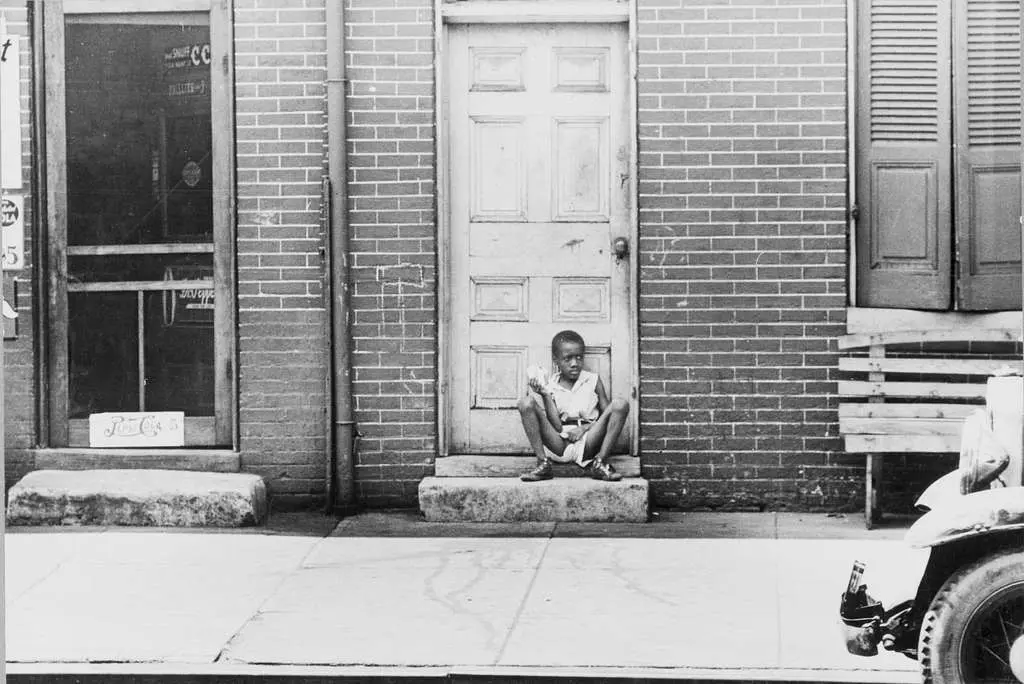
Pennsylvania Avenue became one of the cultural hearts of that Baltimore. In its heyday, the Royal Theatre welcomed performers including Cab Calloway, Billie Holiday, Ray Charles, and James Brown. Around it stood Black owned businesses, clubs, restaurants, churches, and gathering places. The music was part of the story, but so was the life happening before and after the show. People needed somewhere to meet, somewhere to talk, and something good to eat. Visit Baltimore: Pennsylvania Avenue Black Arts and Entertainment District
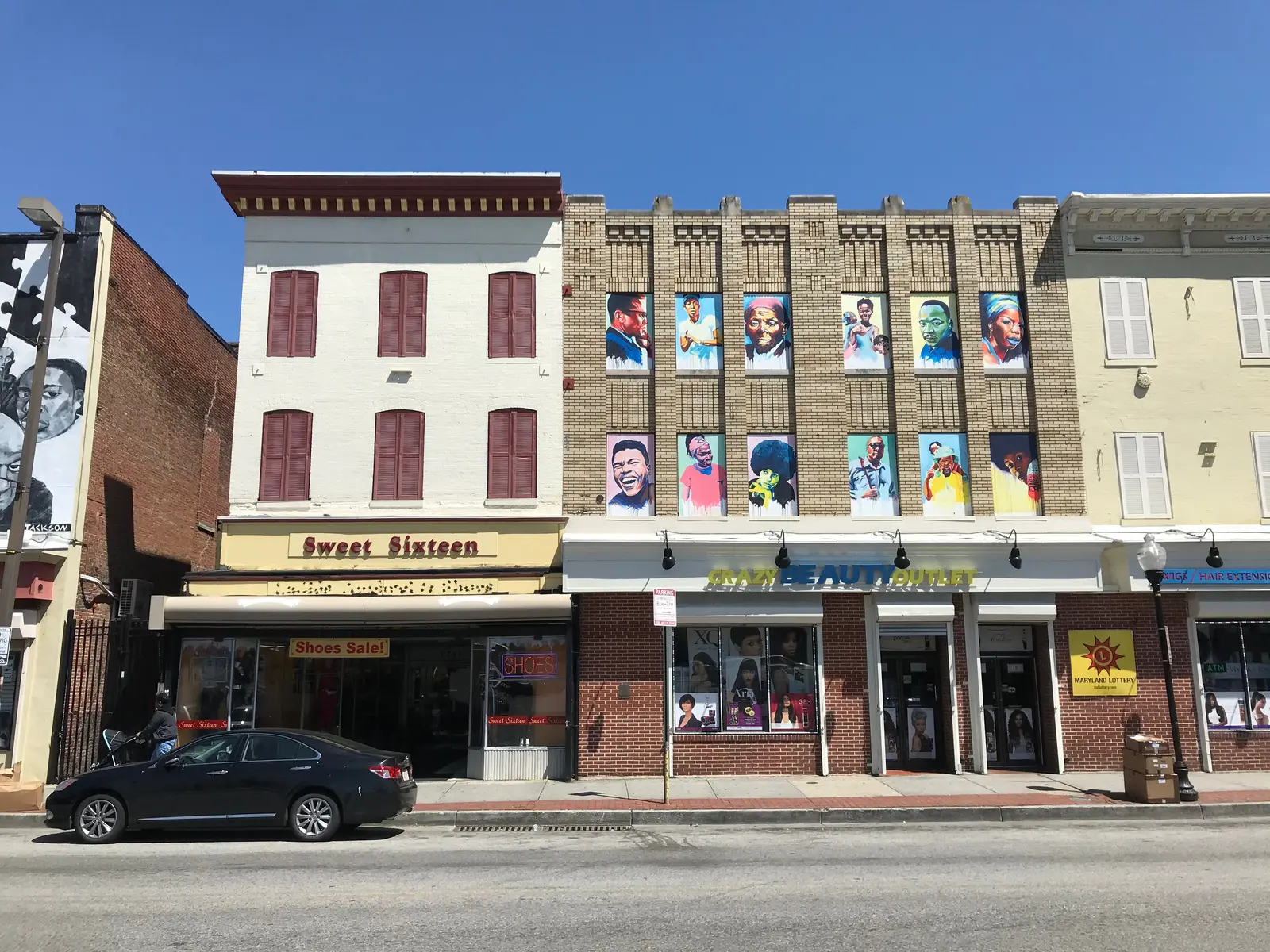
The chicken box belongs to that larger tradition of neighborhood food. Its importance does not come from a celebrity chef deciding it was worthy. It comes from repetition. Generations ordered it after school, after work, before a game, after a night out, or because dinner needed to be hot and affordable. A city claims a food by returning to it.
Our version changes the form without pretending to replace the original. We are using buttermilk fried chicken thighs instead of the classic wings and serving them with a sweet hot ketchup and pepper sauce that nods to the essential carryout finish. This is not a historic Baltimore chicken box recipe. It is our Cook the Competition interpretation, built with respect for the food that inspired it.
And because this is The Blackened Ladle, the box has been opened and the rest of Baltimore is climbing in.
The German Kitchens That Brought the Kraut and the Dough
Long before sauerkraut became the ingredient somebody at the Thanksgiving table warned the newcomer about, Baltimore was one of America’s great ports of entry.
Between the early nineteenth century and 1914, nearly two million immigrants arrived through Baltimore. Locust Point connected steamships to the Baltimore and Ohio Railroad, which meant a person could cross the Atlantic and continue inland with remarkable efficiency for the era. Germans were the largest immigrant group to arrive during much of that period, and by the middle of the nineteenth century Baltimore had one of the largest German immigrant populations in the country. Explore Baltimore Heritage: Baltimore Immigration Memorial
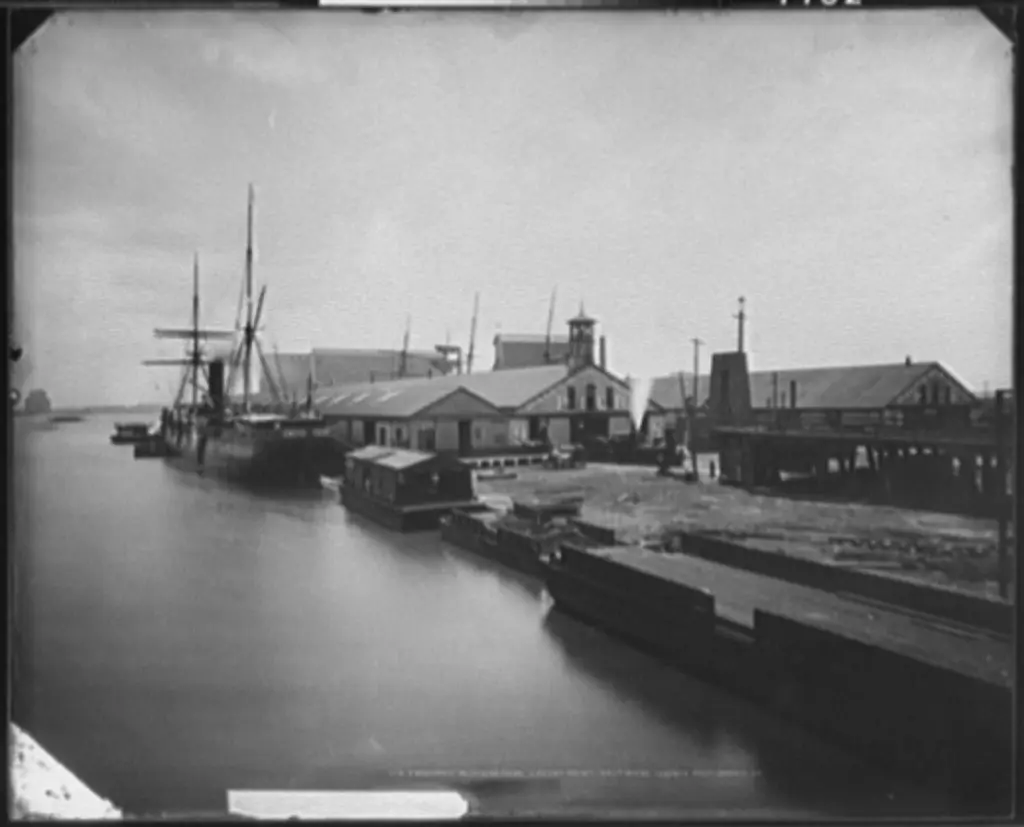
Those newcomers did not arrive empty handed. They brought trades, clubs, churches, breweries, and foodways built around bread, sausage, potatoes, mustard, cabbage, and preservation. Sauerkraut made practical sense before refrigeration, but practicality alone does not explain why a food survives for generations. It stayed because people liked it. The sharpness wakes up a rich plate. The cabbage stretches a meal. It works beside pork, sausage, potatoes, and eventually, in Baltimore, Thanksgiving turkey.
By the late nineteenth century, sauerkraut had become so familiar in Baltimore and across Maryland that it moved beyond the tables of German families. Today, many local families consider Thanksgiving incomplete without at least a spoonful beside the turkey and stuffing. People who cannot name a German ancestor still know where the kraut goes on the holiday plate. That is how immigrant food becomes city food. Baltimore Magazine: How Did Sauerkraut Become a Staple on Baltimoreans’ Thanksgiving Plates?
The German influence also lived in Baltimore’s ovens. German immigrants became brewers, bakers, and confectioners, opening neighborhood shops and market stalls that helped shape the city’s bread and pastry culture. The Berger family arrived from Germany in the 1830s and built a Baltimore baking legacy. Adam Otterbein opened a pastry shop in Locust Point in 1881. Other German born bakers worked from rowhouse basements, corner storefronts, and larger commercial bakeries, turning old country skill into Baltimore routine. German Marylanders: Bakers and Candymakers
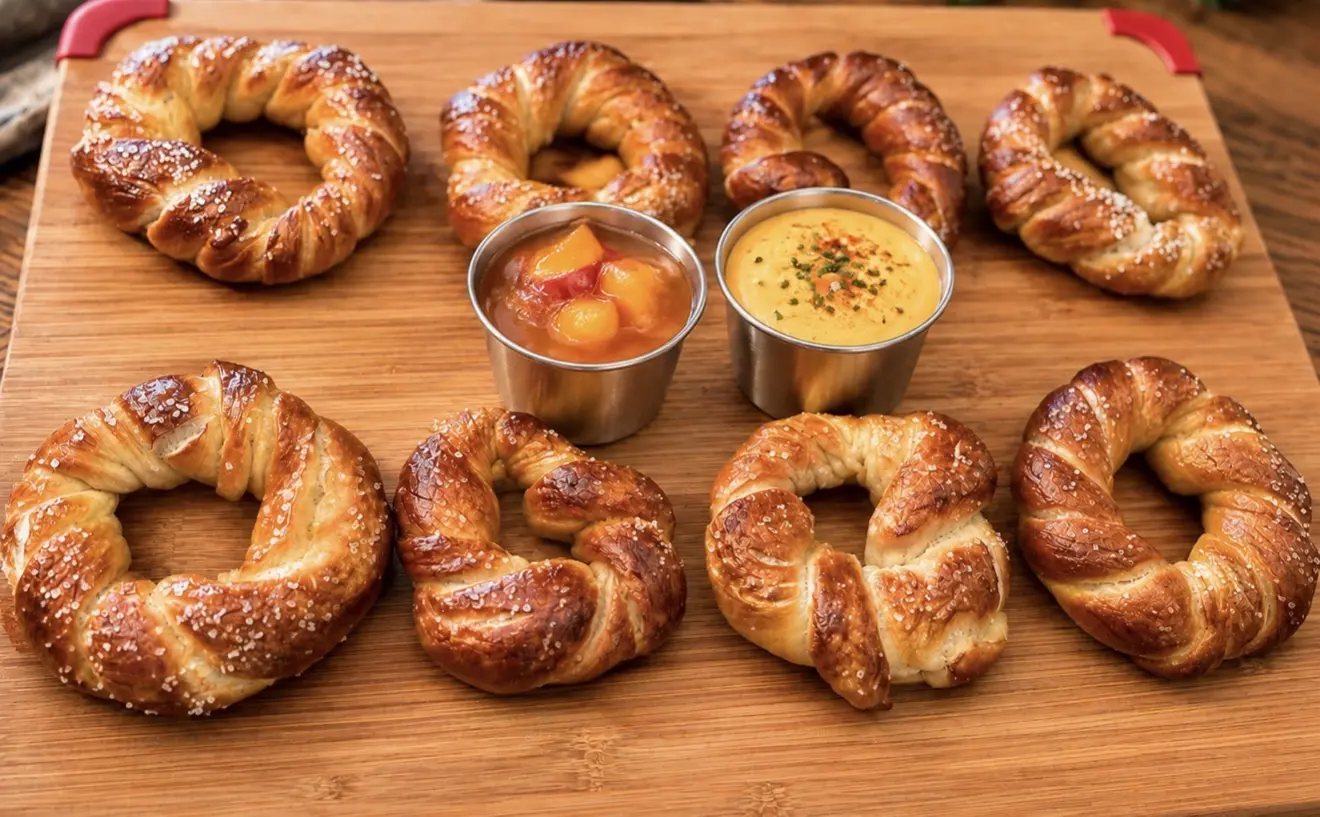
That gives our sourdough pretzel knots a place in the story without forcing a claim the history cannot support. Soft pretzels are part of a broader German baking tradition, not a uniquely Baltimore invention. Our knots honor the bakers, bread makers, and working kitchens that grew around the city’s German communities. The sourdough discard is our own Blackened Ladle habit of making one ingredient earn its keep twice.
Our kraut cakes follow the same approach. We fold sauerkraut into raw shredded Yukon Gold potatoes with onion, caraway, and sourdough discard, fry them thin and crisp, and serve them with cider mustard cream. Potatoes bring comfort. Sauerkraut brings acid. Sourdough brings depth. Mustard walks into the room like it has been invited to every German Baltimore supper since the harbor started filling with steamships.

Then the fried chicken arrives, the pretzels meet peach butter, and the plate stops behaving like a history textbook.
Good.
The Arabbers Who Brought the Market to the Block
If Baltimore’s immigrant piers tell the story of food traditions entering the city, the Arabbers tell the story of food moving through it.
Arabbing, pronounced with a long first A, is Baltimore’s name for the tradition of selling goods from horse drawn wagons, pushcarts, trucks, and street stands. The work once included fish, poultry, ice, wood, and coal, but the image that endures is the produce cart. Fruit and vegetables were stacked high on a brightly painted wagon. Bells announced the horse. The vendor’s musical holler announced what was fresh. Smithsonian Folklife Festival: The Arabbers of Baltimore
The trade was not always exclusively Black, but after the Civil War it became an important path to work and independence for African American men. Over time, Black families carried the tradition from one generation to the next. Arabbers established routes, built relationships with customers, cared for horses, maintained wagons, and brought produce directly to people who might have difficulty reaching a grocery store. That included older residents, people with disabilities, families without cars, and neighborhoods left with too few fresh food options. National Endowment for the Arts: City Lore and Baltimore Arabbers
The holler was part sales pitch, part song, and part neighborhood signal. An Arabber did not quietly place peaches on a shelf and wait. He stretched the word until it could travel down a rowhouse block. People heard the horse, the bells, and the call and knew the market had come to them. Contemporary accounts describe wagons carrying peaches, melons, oranges, grapes, greens, corn, potatoes, and whatever else was good that day. Smithsonian Folklife Festival: Call of the Arabber Fruit Vendors
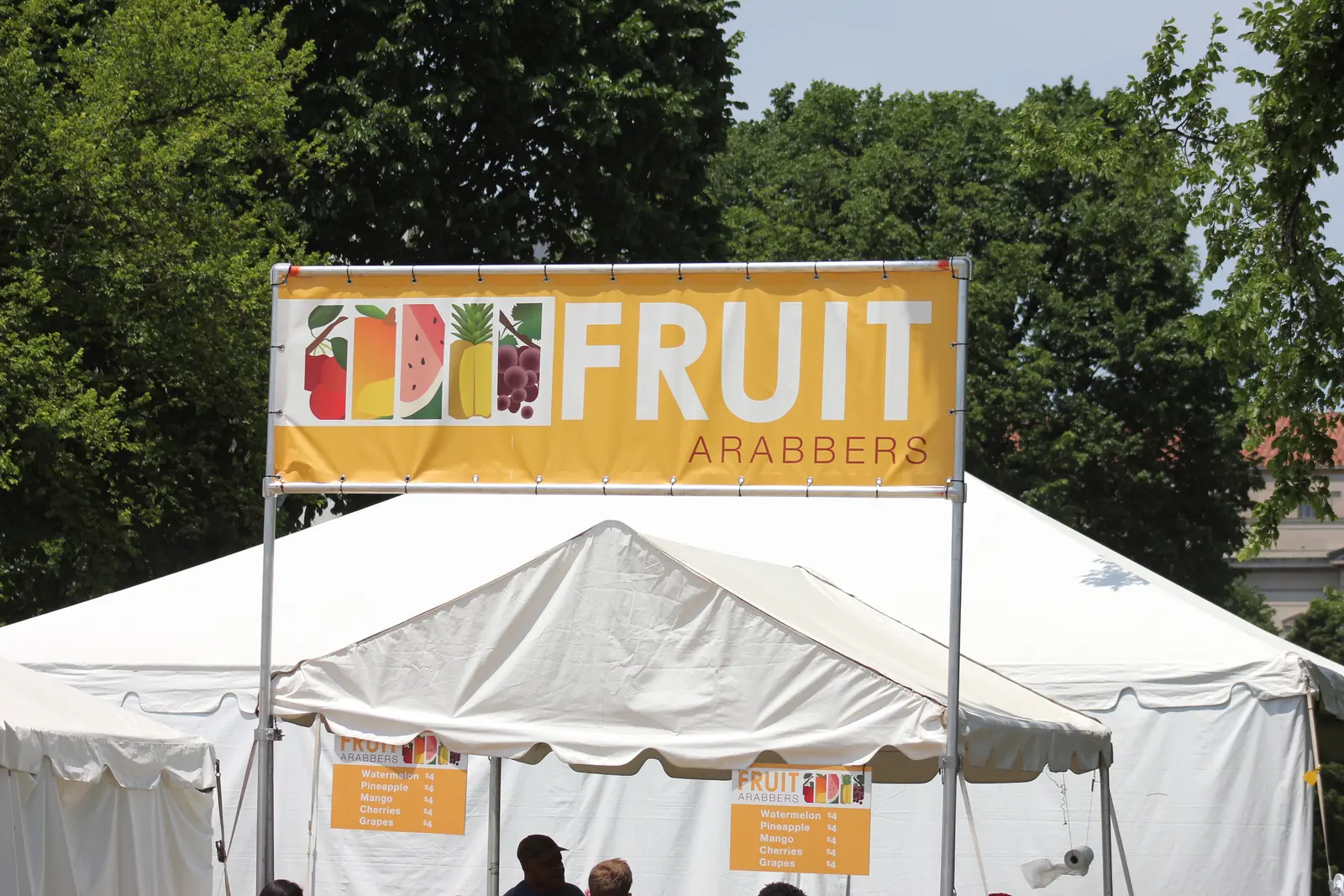
Our peach pepper butter begins with that image of ripe fruit moving through the city. The peach gives the pretzel a soft, fragrant sweetness. Pepper keeps it from becoming dessert. Butter lets it melt into every fold of the knot. It is not an Arabber recipe, and we should never present it as one. It is an original sauce inspired by the produce, motion, sound, and community service of Baltimore’s Black fruit vendors.
There is something fitting about pairing that butter with a German style pretzel. One tradition represents immigrant baking that settled into Baltimore neighborhoods. The other represents Black entrepreneurs carrying produce between those neighborhoods. The pairing is not a claim that Arabbers historically sold peach butter with pretzels. It is our way of putting two Baltimore histories into conversation without pretending they were always the same story.
The Arabber tradition survives, but only through the work of a small number of people and preservation groups keeping the horses, wagons, stables, routes, and knowledge alive. Calling it colorful is easy. Understanding it as labor, family inheritance, food access, and Black enterprise is more important. Capital News Service: Baltimore’s Arabbers keep history alive
One City, Many Tables
The most interesting part of Baltimore’s sauerkraut story is not simply that German immigrants brought it. It is what happened after everybody else got hold of it.
Black Maryland cooks made their own versions, seasoning sauerkraut with pork or other smoked meat and adding ingredients such as brown sugar, caraway, or poultry seasoning. In one Baltimore family account, poet Jackie Oldham remembered her grandmother Lillian Randall Barber serving sauerkraut with pig tails and a little sugar to soften its bitterness. The dish passed from her grandmother’s West Baltimore table to her mother and then through the family’s holiday gatherings. That is not a theory about cultural exchange. That is a family remembering what was in the pot. Baltimore Fishbowl: Thanksgiving and sauerkraut on a wooden ship
That story breaks open the easy version of food history.
The easy version gives every group an ingredient, draws a border around it, and calls the plate multicultural. The real version is warmer, stranger, and much more human. A German preservation tradition lands in Baltimore. Black cooks season it through their own experience and taste. It appears beside turkey, ravioli, pork, or whatever else a particular family considers nonnegotiable. German bakers build shops and market stalls. Black fruit vendors carry produce from block to block. Children grow up believing this is simply how their city works.
This is why our chicken, kraut cakes, pretzel knots, and peach butter belong together. Not because every Baltimore carryout serves this menu. It does not. Not because we discovered a forgotten nineteenth century recipe that conveniently predicted this football game. We did not. They belong together because each component opens a door into the way Baltimore eats.
The chicken box represents Black neighborhood carryout culture. The kraut shows how an immigrant food crossed family and community lines. The pretzel connects to generations of German baking. The peach butter remembers the Arabber wagons that made fresh produce mobile. None of these traditions needs to be flattened for the menu to feel whole.
The sauces finish the conversation. Cider mustard cream leans into the kraut’s tang and the old German flavor vocabulary without turning the plate into a costume. The sweet hot ketchup and pepper sauce brings us back to the chicken box, where condiments are part of the order. Peach pepper butter turns the pretzel into the bridge between bakery and produce cart. Football food should occasionally require both hands and a second napkin.
Baltimore itself makes sense as the setting for this kind of collision. Charm City did not receive its best known nickname in colonial times. It came from a 1974 civic campaign meant to remind outsiders that the city held more beauty, history, and character than its national reputation allowed. That is something Buffalo can understand. Both cities have spent years being reduced to weather reports, industrial decline, and punchlines written by people passing through. Both know the difference between being looked at and being known. Baltimore Magazine: Are We Still Charm City?
Buffalo and Baltimore are waterfront cities shaped by industry, immigration, segregation, neighborhood pride, and the long work of rebuilding after jobs and people moved away. Their architecture is different. Baltimore has its endless rowhouses. Buffalo has its doubles, workers’ cottages, and broad avenues. But both cities understand the block as an identity. Ask where somebody is from and the answer may get more specific than the city name very quickly.
They also understand what a football team can mean when a city is tired of being explained by somebody else.
Bills, Ravens, and a Rivalry That Refuses to Be Normal
The Bills and Ravens do not have the decades of shared divisional irritation that Buffalo has with New England or Miami. Somehow, they have still managed to make nearly every recent meeting feel like it needs its own blood pressure warning.
Through the 2025 season, the all time series sits perfectly even at seven wins apiece. Buffalo owns both playoff meetings. The Bills won in the 2020 season’s divisional round, a game remembered for Taron Johnson returning a Lamar Jackson interception 101 yards for a touchdown through the Orchard Park wind. Four years later, Buffalo survived another divisional round meeting when Baltimore’s attempt to tie the game in the final minutes fell incomplete. Pro Football Reference: Bills versus Ravens matchups
The regular season has provided no peace. Baltimore overwhelmed Buffalo in 2018. The Ravens won a tight game in 2019. The Bills erased a 17 point deficit in Baltimore in 2022. The Ravens answered with a commanding win in 2024. Then came the 2025 opener in Orchard Park, when Buffalo trailed by 15 with less than four minutes remaining and somehow won. At this point, if these teams produce a calm afternoon, both fan bases should probably check the fine print.
Now Baltimore returns for Week 8 on November 1, 2026, the first regular season Bills and Ravens meeting at the new Highmark Stadium. Kickoff is scheduled for 1 p.m., which feels almost disrespectfully ordinary for a matchup that keeps behaving like prime time. Buffalo Bills: 2026 schedule
There is another connection underneath the highlights. Buffalo and Baltimore fans know how to build community around teams that carry the city’s name into rooms where the city itself is often misunderstood. Ravens purple and Bills red, white, and blue do more than identify a rooting interest. They signal home. They turn parking lots into neighborhoods for a few hours. They make strangers family until the clock hits zero, at which point some of those relationships may need a brief cooling period.
That is the energy this meal is built for.
The fried chicken is bold enough for a rivalry that has produced playoff heartbreak, impossible comebacks, and several afternoons that should have come with medical supervision. The kraut cakes carry the story of a food that crossed community lines. The pretzels remember the city’s German bakers. The peach butter tips its hat to Black vendors who made fresh produce move, sing, and arrive at the door.
That is also the point of Cook the Competition. We are not trying to place an entire city into one neat recipe. We are finding a way into its history, listening for the stories that survived at neighborhood counters and family tables, and then making something new from what we learned.
Baltimore does not keep its history in separate boxes, and neither does this menu.
So this week, Charm City gets fried chicken, crispy kraut cakes, sourdough pretzel knots, three sauces, and a seat at our table. We will respect the history, enjoy the mess, and hope the Bills are the only ones serving a loss.
Different city. Ridiculous food. Go Bills.
Comments
Loading comments…