
ARMENIA · THE STORY BEHIND THE BOWL
Armenia: The Pumpkin That Had Its Own Song
From the Armenian Highlands to the family table, the history of ghapama and the harvest traditions that inspired our most ambitious fall soup.
How does a pumpkin earn its own song?
It helps to arrive at the table whole.
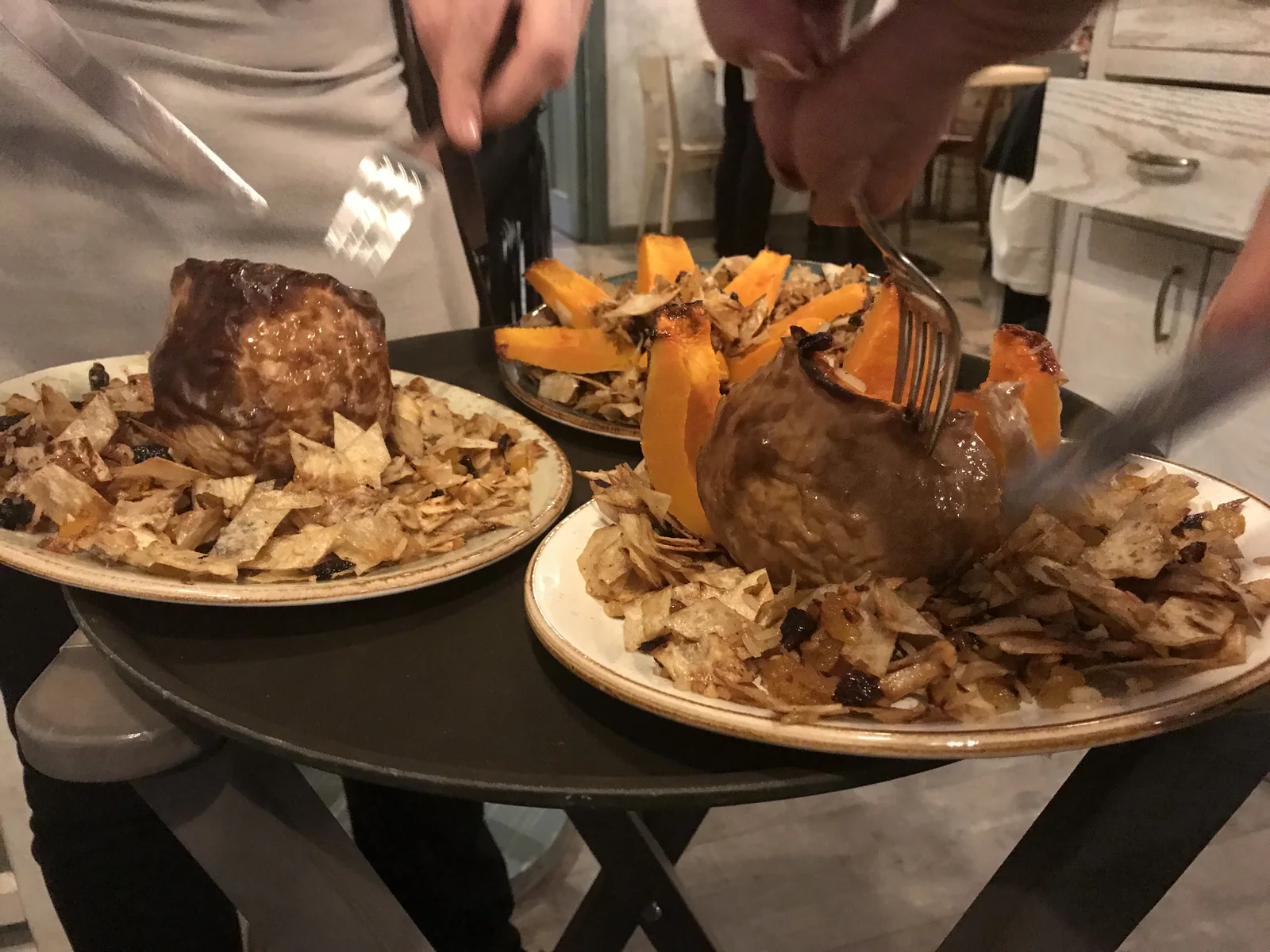
Ghapama does not enter quietly. A pumpkin is hollowed out, filled with rice, dried fruit, nuts, butter, and, in many versions, honey and cinnamon. It bakes until the shell softens and the filling absorbs everything happening inside it. Then the pumpkin is carried out intact. The lid comes off, a knife follows the pumpkin's natural ribs, and the sides open around the rice like orange petals.
Before anybody tastes it, the dish has already created a moment.
That moment is the beginning of our Soup Season trip to Armenia. Not because ghapama can explain an entire country. No single dish can carry that assignment. It can, however, show us how landscape, harvest, celebration, memory, and a wonderfully catchy song can gather around one family table. Smithsonian Folklife: Ghapama, Stuffed Pumpkin
A Pumpkin Worth Singing About
Traditional ghapama is built from ingredients that look modest one at a time and celebratory when they are brought together. Rice gives the filling its body. Dried apricots, raisins, plums, or other fruits add concentrated sweetness. Walnuts or almonds bring richness. Butter carries the flavors through the rice. Recipes change by household and region. A Smithsonian account notes a version associated with Goris in southeastern Armenia that favors dried apricots and cornelian cherries, while other preparations may include pumpkin flesh or meat. Historically expensive ingredients helped make the dish better suited to a feast than an ordinary supper. Smithsonian Folklife: Ghapama, Stuffed Pumpkin
Today, ghapama appears at Christmas and New Year celebrations, weddings, and other festive gatherings. Its theatrical side matters. The pumpkin arrives as a sealed package, and the table watches as its contents are revealed. The person who made it has placed good things inside something good, closed it carefully, and carried the whole generous production to the people they love. That is hospitality with a little stagecraft.
Then there is the song. “Hey Jan Ghapama” is commonly sung and played in connection with the dish, praising its aroma, flavor, and the crowd that comes to see it. A version documented by the Armenian vocal trio Zulal identifies it as a festive song from Akhaltsikhe, a city in present-day Georgia with a long Armenian history. The Armenian National Song and Dance Ensemble also recorded the song, and singer Harout Pamboukjian helped make it familiar across the modern diaspora. The tune is traditional, but its first author and exact date are not established by the sources we found. That uncertainty is worth preserving. Ghapama has a real musical tradition without needing an invented ancient origin story. Zulal song notes · Smithsonian Folkways recording · National Center of Folk Music and Dance
The name itself is less settled than the recipe introductions scattered across the internet might suggest. It is sometimes translated or explained as food cooked in a covered pot, but we did not find a strong linguistic source that proves a single etymology. Better to say what can be seen: ghapama is a stuffed, covered vessel and a dish whose cultural life has grown far beyond a definition.
A Country Built in Elevation
To understand why grains, orchard fruit, nuts, dairy, and preservation recur across Armenian cooking, it helps to look at the terrain. The Republic of Armenia is a landlocked country in the South Caucasus. It is overwhelmingly mountainous, cut by high plateaus and deep river valleys, with an average elevation around 1,800 meters. Short distances can bring meaningful changes in altitude and climate. Summers can be hot in the valleys while winters are severe in higher communities. Food here has always answered geography. Food and Agriculture Organization: Armenia at a glance · Government of Armenia: Geography

The wider Armenian Highlands have supported agriculture for millennia. Wheat, barley, and other grains found homes in upland fields. Valleys supported vineyards and orchards. Seasonal abundance could be brief, which made drying, fermenting, pickling, and storing practical household knowledge rather than quaint tradition. A dried apricot is portable summer. A jar of preserve is a small refusal to let the harvest disappear. A sack of grain is possibility waiting for winter.
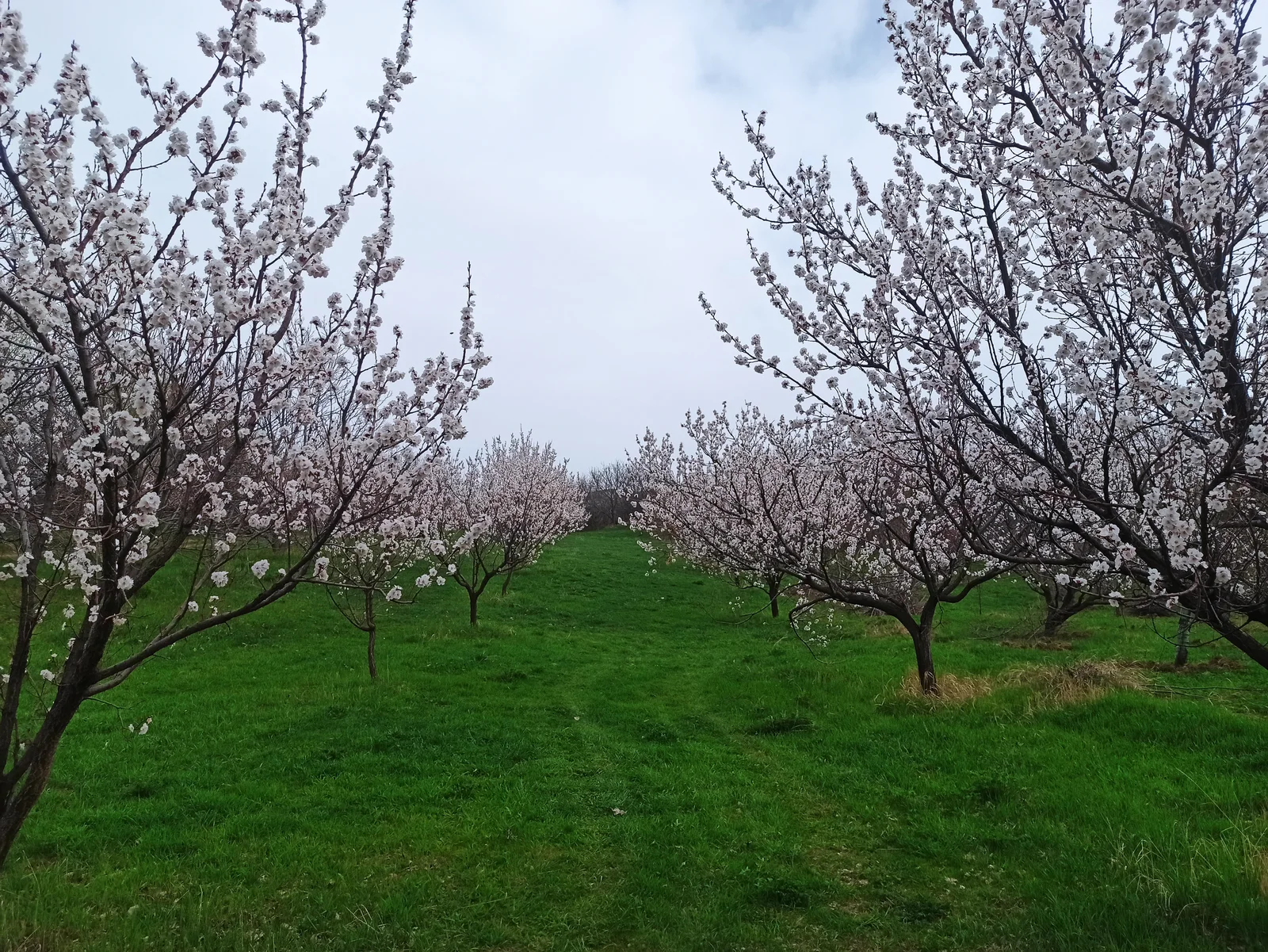
Apricots carry special cultural weight. Their botanical name, Prunus armeniaca, preserves an old association with Armenia, and the fruit remains one of the country's most recognizable symbols. That does not mean modern botany identifies Armenia as the apricot's uncontested place of origin. The fruit traveled across regions over a very long history. What is well documented is Armenia's deep record of apricot cultivation and diversity, including scores of varieties maintained in agricultural collections. Cultural belonging does not require an exclusive claim. FAO: Conserving Armenian apricot genetic resources · FAO: Fruit trees and vines of the Southern Caucasus
What the Harvest Carries
Ghapama makes sense as a harvest dish because it gathers foods that can outlast the moment when they were picked. The pumpkin is both ingredient and baking vessel. Rice and grains keep. Fruit becomes sweeter and more concentrated as it dries. Walnuts protect their richness inside hard shells. Honey keeps its brightness through the cold months. Butter turns a collection of stored ingredients into something lush enough for a celebration.
Not every ingredient on our Soup Season bowl belongs inside every traditional ghapama. Yogurt and other cultured dairy products are part of the broader Armenian table, but our roasted garlic yogurt cream is our own counterpoint to the sweet squash. Pomegranate appears throughout the cuisines and visual culture of the region, but our pomegranate molasses glaze is not evidence of a standard ghapama recipe. We use it because its sharp, dark fruit cuts through brown butter and cream like someone opening a window in a warm kitchen.
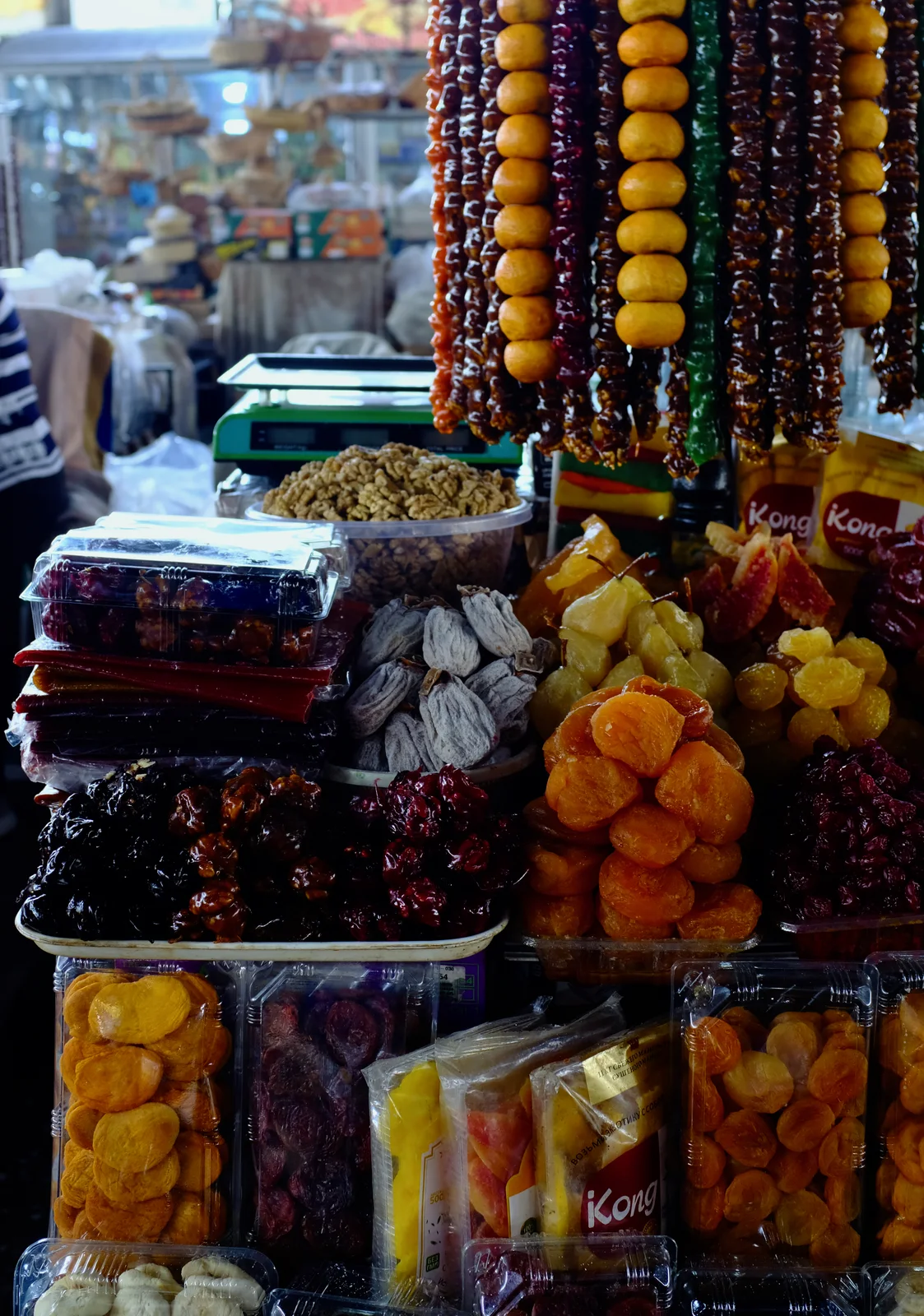
Markets make the logic visible. Fresh fruit comes and goes. Dried apricots, plums, raisins, fruit leather, nuts, spices, and preserves stack up in durable color. The modern display looks abundant, but behind that abundance is an old calculation: what can be eaten now, what can be saved, and what deserves to be held back for guests.
One Table, Many Armenias
Armenian cooking is not a single locked recipe box. Communities lived across the Armenian Highlands and throughout the Ottoman, Persian, Russian, and later Soviet worlds. Mountain ranges, borders, trade, religion, neighboring cuisines, and family preference all shaped what people cooked. An Armenian household rooted in Yerevan may not set the same table as one whose family came through Lebanon, Iran, Istanbul, Boston, or Los Angeles. All of those tables can still be Armenian.
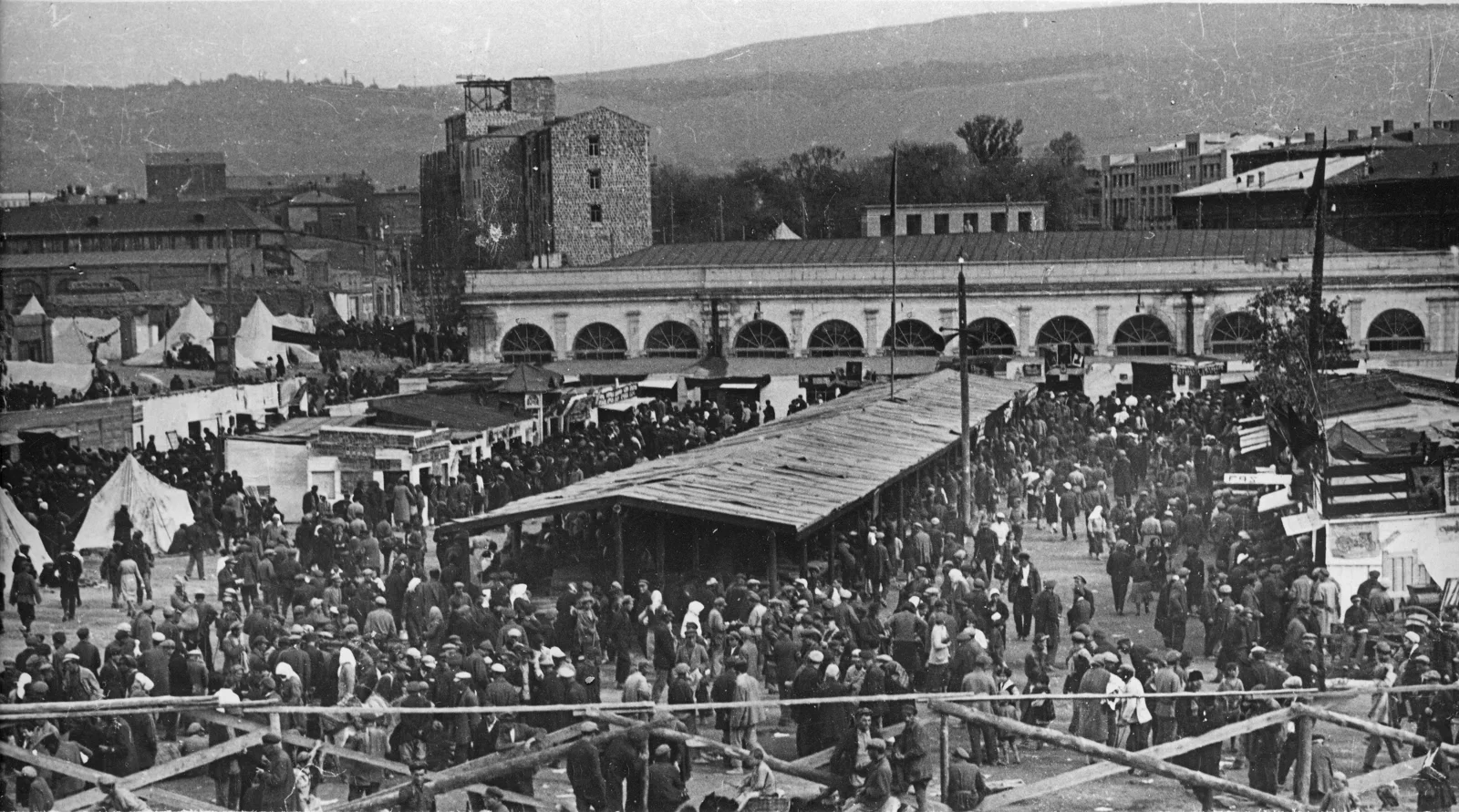
That variety became inseparable from rupture. During the Armenian Genocide beginning in 1915, more than one million Armenians were killed and hundreds of thousands were displaced. Survivors rebuilt lives across the Middle East, Europe, the Americas, and elsewhere. Recipes traveled in memory, in notebooks, and in the practiced movements of hands. Ingredients changed when a familiar fruit, herb, flour, or cheese was unavailable. Names shifted between languages. A dish could become sweeter, leaner, faster, or reserved for the one holiday when a scattered family came back together. Smithsonian Folklife: Food and Longing in the Armenian Diaspora
Preservation does not mean freezing food in one supposedly pure form. It can mean adapting a recipe enough to keep making it. The Armenian Museum of America describes its recipe project as a record of regional variation, family history, and the ways cooks adjust to new places. That is a more honest picture of continuity. A recipe survives because somebody chooses to cook it again, sometimes exactly as taught and sometimes with the ingredient available at the grocery store down the street. Armenian Museum of America: A note to readers · Armenian recipes and family histories
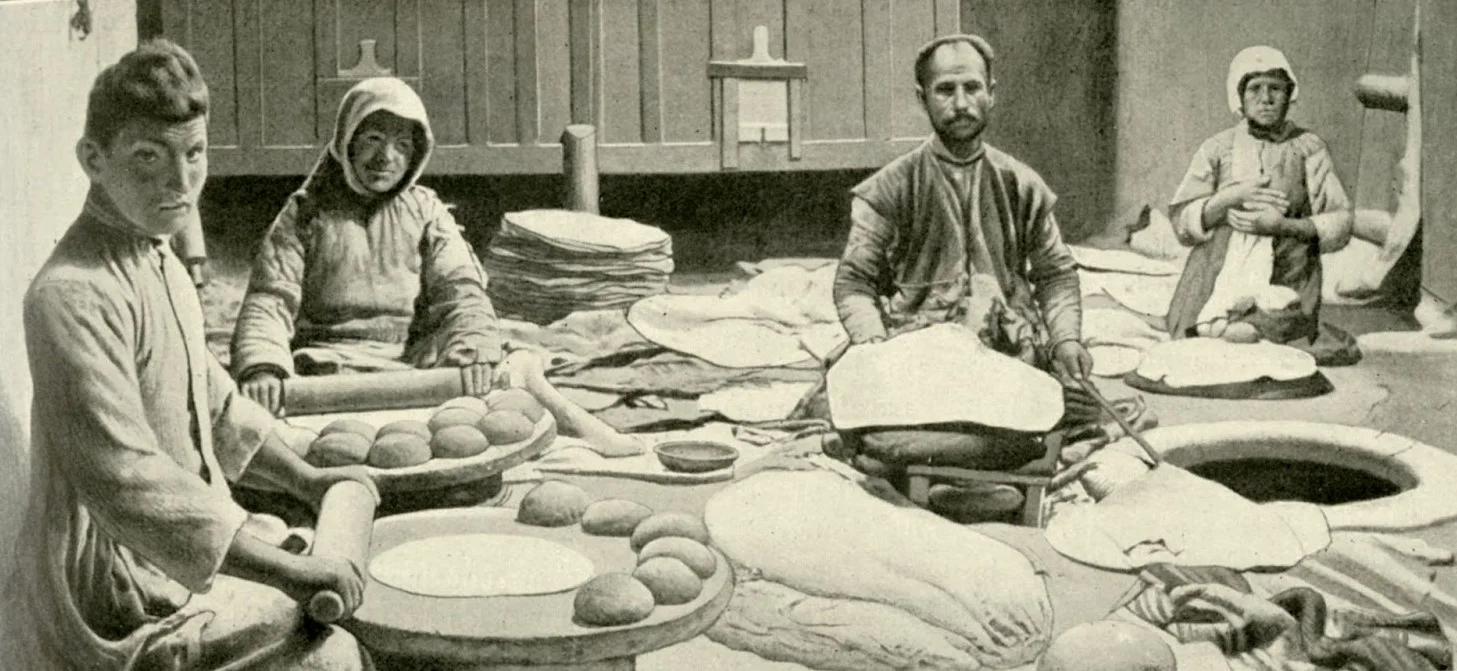
Ghapama belongs within that larger, varied story. It is a festive dish with recognizable structure, but no single filling can speak for every region or household. Its power lies partly in that flexibility. The pumpkin can hold the harvest a family knows. The song can turn cooking into occasion. The recipe can remain familiar while still carrying the fingerprints of the person who made it.
Turning the Pumpkin Inside Out
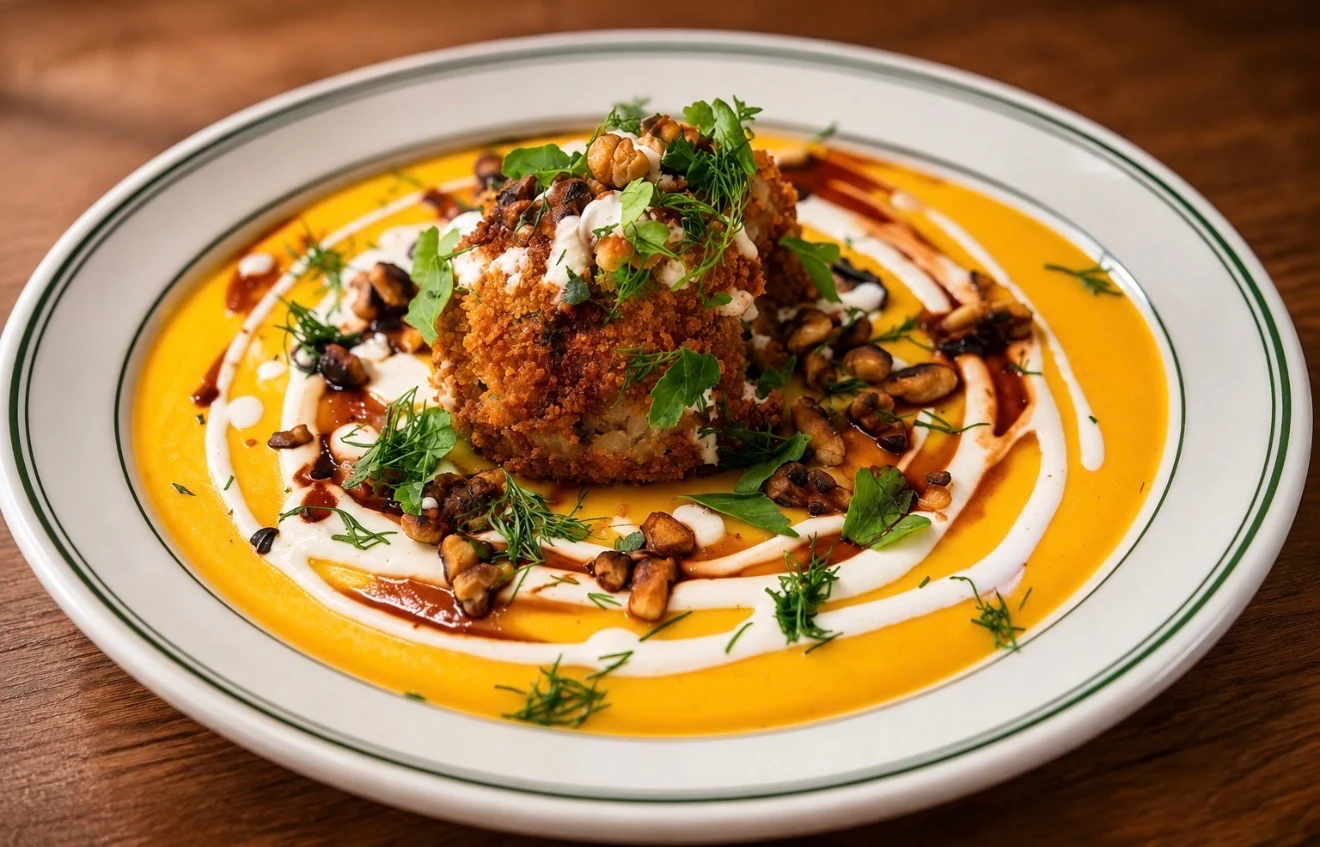
Our Soup Season #3 recipe begins with respect for that structure and then deliberately changes it. We are not making traditional ghapama, and we are not claiming to have discovered a forgotten Armenian soup. We are asking what happens when the central idea of ghapama becomes a bowl.
Butternut squash is roasted until its edges darken, then blended with caramelized onion, garlic, stock, cream, coriander, and just enough dried apricot to round the squash without turning dinner into dessert. Brown butter gives the soup its toasted backbone. The result is savory first, with sweetness arriving quietly from the vegetables and fruit.
The filling becomes an oversized crispy rice bomb. Short-grain rice is mixed with caramelized onion, toasted walnuts, dried apricot, parsley, dill, lemon zest, and restrained spices, then enclosed and fried until the outside is deeply golden. This croquette is an original Blackened Ladle creation. It is intentionally too dramatic to disappear politely into the bowl.
Roasted garlic yogurt brings cool acidity. Pomegranate molasses adds a dark, tart line. Fresh herbs and toasted walnuts finish the surface. Each garnish has a job. Together, they keep the brown butter, cream, squash, and fried rice from becoming one long note of richness.
Then comes the part we have been waiting for. In traditional ghapama, the rice and fruit remain hidden inside the pumpkin until it is opened at the table. In our bowl, the arrangement is reversed. The squash has moved outside, surrounding the filling as soup. The crisp rice bomb sits in the center, waiting for a spoon.
Crack it open. Let the apricot, walnut, rice, herbs, and onion fall into the roasted squash. The surprise is still there. We have simply turned the pumpkin inside out.
Comments
Loading comments…